


Prophet Yūsuf ibn Yaʿqūb: The Most Beautiful Story in the Quran (UK British Muslim Guide)
By admin on 12/22/2025 · 8 min read
The most beautiful story in the Quran
Surah Yūsuf is the only surah in the Quran that tells one prophet's story from start to finish in a single continuous narrative. Allah Himself describes it in the surah's opening verses as "the most beautiful of stories" (Quran 12:3). For British Muslim families, Prophet Yūsuf ibn Yaʿqūb (Joseph, peace be upon him) is the prophet whose life carries the deepest lessons about jealousy, betrayal, false accusation, prison, power, and forgiveness — the entire emotional and moral spectrum of human experience compressed into a single Quranic narrative.
This guide walks through his story from birth to reunion with his father, identifying the major scenes and the lessons each carries for British Muslim families today.
His family
Yūsuf ﷺ was the eleventh of the twelve sons of Prophet Yaʿqūb (Jacob, peace be upon him), grandson of Prophet Isḥāq (Isaac), great-grandson of Prophet Ibrāhīm. His mother was Rachel (Rāḥīl in Arabic), one of Yaʿqūb's wives. He had a younger full brother, Binyāmīn (Benjamin), and ten older half-brothers from his father's other wives. From the eleven other sons of Yaʿqūb came the twelve tribes of Banū Isrā'īl.
The dream
The story begins with a dream. The young Yūsuf saw eleven stars, the sun and the moon prostrating to him. He told his father, who recognised the prophetic significance immediately and warned him not to share the dream with his brothers. The Quran preserves Yaʿqūb's reply (12:5): "O my son, do not relate your vision to your brothers, lest they contrive against you a plan."
The brothers, however, sensed Yaʿqūb's particular love for Yūsuf and Binyāmīn and grew jealous. They plotted to remove him.
The brothers' betrayal
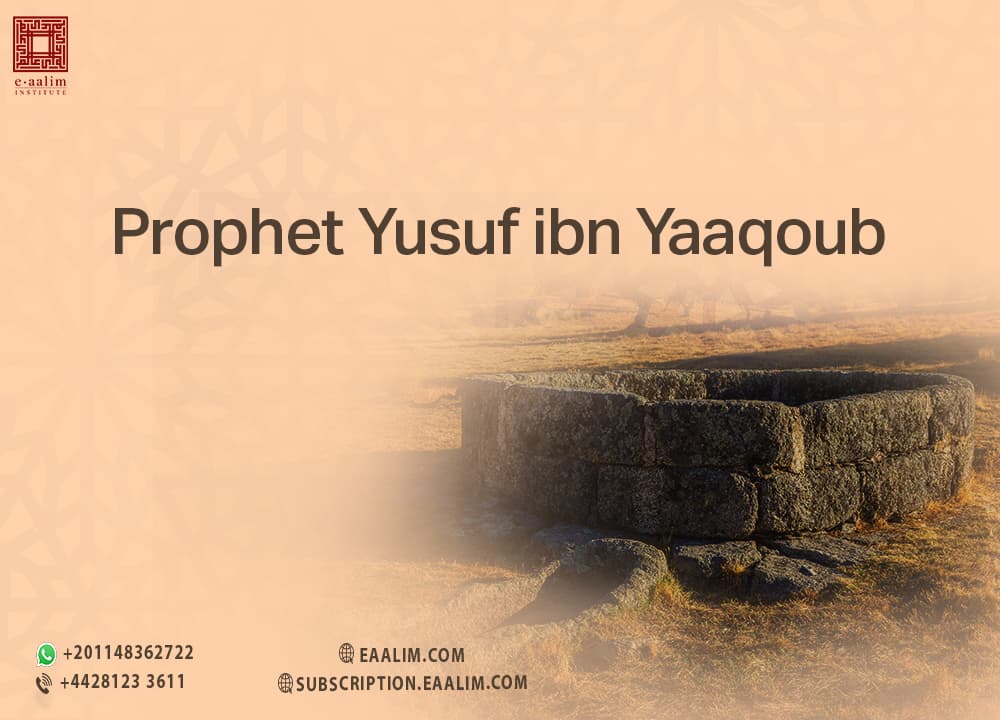
The brothers persuaded Yaʿqūb, against his instinct, to let Yūsuf accompany them on a trip "to play and enjoy himself" (12:12). Once away from their father, they threw Yūsuf into a well and returned to Yaʿqūb with his blood-stained shirt — a wolf, they claimed, had eaten him. Yaʿqūb did not believe them. The Quran preserves his beautiful response of dignified patience: "Beautiful patience [is most fitting]. And Allah is the one sought for help against that which you describe" (12:18).
This single phrase — fa-ṣabrun jamīl — has comforted Muslim families across fourteen centuries. When you cannot do anything about a situation, beautiful patience is the right response.
Sold into slavery in Egypt
A passing caravan drew Yūsuf out of the well and sold him as a slave in Egypt. He was bought by a high official referred to in the Quran as al-ʿAzīz — usually identified as Egypt's chief minister or treasurer. Al-ʿAzīz's wife, named in classical commentary as Zulaykhā, became infatuated with the young Yūsuf, who had grown into a man of striking beauty.
The temptation and the prison
Surah Yūsuf 12:23-35 preserves one of the most carefully narrated moral tests in the Quran. Zulaykhā closed the doors of the inner room and called Yūsuf to her. He fled towards the door. She tore his shirt from behind. They both reached the door, where her husband was waiting. Yūsuf maintained his innocence; an infant in the household — or in some narrations a wise relative — pointed out the evidence of the torn shirt: torn from the front meant Yūsuf had attacked her, torn from the back meant she had pursued him. The shirt was torn from the back. Yūsuf's innocence was clear.
And yet, despite his proven innocence, Yūsuf was thrown into prison — the political demands of an aristocratic household trumped the obvious truth. The Quran preserves his response (12:33): "My Lord, prison is more beloved to me than that to which they invite me."
For British Muslim youth navigating environments where the morally correct choice carries social or professional cost, Yūsuf's preference for prison over compromise is the prophetic standard.
His years in prison
Yūsuf spent some years in prison — the Quran does not specify the exact number, but classical commentaries place it at around seven. There he encountered two fellow prisoners, each of whom had had a dream they could not interpret. He interpreted both dreams accurately — one prisoner would be released and serve again as the king's cupbearer; the other would be executed.
The cupbearer was indeed released. Yūsuf had asked him to mention his case to the king. The cupbearer forgot, and Yūsuf remained in prison some years more — a detail the Quran preserves as part of the divine plan, not a failure on Yūsuf's part.
The king's dream and Yūsuf's release
Years later, the king of Egypt had a disturbing dream — seven fat cows being eaten by seven thin cows, and seven green ears of grain alongside seven dry ones. None of the court interpreters could explain it. The cupbearer remembered Yūsuf and told the king. Yūsuf interpreted the dream: seven years of abundant harvest would be followed by seven years of severe famine. He recommended that grain be stored carefully across the abundant years to feed Egypt through the famine.
The king, impressed, summoned Yūsuf — who refused to leave prison until his name had been formally cleared in the matter of Zulaykhā. The investigation was reopened, the women of the court were questioned, Zulaykhā confessed, and Yūsuf's complete innocence was publicly established. Only then did Yūsuf leave the prison and accept the king's invitation to high office.
This detail — refusing to leave prison until his name was cleared — is preserved deliberately. Yūsuf had spent years in prison; his deliverance was at hand; and yet he insisted that his honour be vindicated first. Public reputation, the Quran teaches, matters.
His role as treasurer of Egypt
The king appointed Yūsuf as treasurer of Egypt, with full authority over the grain stores. Across the seven abundant years he stored carefully. When the famine came, Egypt fed not only itself but also the surrounding lands — including the famine-stricken household of his father Yaʿqūb.
The brothers return
Yūsuf's brothers came to Egypt seeking grain. They did not recognise him. He recognised them. Across two trips and several careful interactions — preserved in detail in Surah Yūsuf 12:58-93 — he revealed his identity gradually, tested their character, and eventually brought the entire family from Canaan to Egypt to settle there.
The reunion scene is one of the most emotionally precise in the Quran. Yūsuf forgave his brothers in words that any wronged person can study: "There is no blame upon you today. Allah will forgive you, and He is the most merciful of the merciful" (12:92). He did not minimise their wrong; he did not pretend it had not happened; but he forgave it cleanly.
The reunion with his father
Yaʿqūb ﷺ had wept for Yūsuf for so many years that he had lost his sight. Yūsuf sent his shirt back with his brothers and instructed them to cast it on his father's face. When they did, Yaʿqūb's sight was restored. He travelled with the entire family to Egypt, where the dream of the eleven stars, the sun and the moon was finally fulfilled — they all bowed before Yūsuf in honour and recognition.
The Quran preserves Yūsuf's prayer at this moment of fulfilment (12:101): "My Lord, You have given me sovereignty and taught me the interpretation of dreams. Creator of the heavens and earth, You are my protector in this world and in the Hereafter. Cause me to die a Muslim and join me with the righteous."
Lessons for British Muslim families
Beautiful patience. Yaʿqūb's fa-ṣabrun jamīl is the model for British Muslim families enduring loss they cannot reverse — bereavement, family breakdown, unjust accusation. Patience without complaint to creation is the prophetic standard.
Prison is better than sin. Yūsuf's choice — preferring imprisonment to moral compromise — is the model for British Muslim youth navigating environments where the right choice costs them socially or professionally.
Reputation matters. Yūsuf refused to leave prison until his name was cleared. British Muslims carrying the cost of false accusation should know: insisting on public vindication is a prophetic right, not arrogance.
Forgiveness without minimisation. Yūsuf forgave his brothers without pretending their crime had not occurred. British Muslim families navigating real wrongs from relatives, neighbours or community members should learn this distinction.
Allah's plan operates through the very people trying to harm you. The brothers who sold Yūsuf into slavery were instrumental in the plan that made him treasurer of Egypt. British Muslim teenagers facing apparent setbacks should remember: what looks like the worst day of your life may be the moment your own plan is being set up.
Cause me to die a Muslim. Yūsuf's du'a — at the height of his worldly power — was simply that he die in submission to Allah and join the righteous. This is the right ambition for any Muslim at any age.
Where to go next
For more on the prophets, see our guides on Prophet Ibrāhīm, Prophet Mūsā, Prophet Nūḥ, Prophet ʿĪsā, and Prophet Sulaymān. To study Surah Yūsuf in depth one-to-one with an Al-Azhar-graduate teacher, book a free trial lesson.
Start your journey with Eaalim today!
Start 2 Free Trials


 Share
ShareFrequently Asked Questions
Allah Himself describes it in the surah's opening verses (12:3) as "the most beautiful of stories". It is the only surah in the Quran that tells one prophet's story from start to finish in a single continuous narrative. It carries the deepest lessons about jealousy, betrayal, false accusation, prison, power, and forgiveness — the entire emotional and moral spectrum of human experience compressed into a single Quranic narrative.
He saw eleven stars, the sun and the moon prostrating to him. His father Yaʿqūb ﷺ recognised the prophetic significance immediately and warned him not to share the dream with his brothers. The Quran preserves Yaʿqūb's warning (12:5): "O my son, do not relate your vision to your brothers, lest they contrive against you a plan." The dream foreshadowed Yūsuf's future prophethood and authority.
Out of jealousy at their father's love for Yūsuf and his younger brother Binyāmīn, the older brothers persuaded Yaʿqūb to let Yūsuf accompany them on a trip "to play and enjoy himself". Once away, they threw him into a well and returned to Yaʿqūb with his blood-stained shirt — claiming a wolf had eaten him.
"Beautiful patience" — Yaʿqūb's response when his sons returned with the false story (Quran 12:18): "Beautiful patience [is most fitting]. And Allah is the one sought for help against that which you describe." This single phrase has comforted Muslim families across fourteen centuries. When you cannot do anything about a situation, beautiful patience is the right response.
A passing caravan drew him out of the well and sold him as a slave in Egypt. He was bought by a high official referred to as al-ʿAzīz — usually identified as Egypt's chief minister or treasurer. He grew up in al-ʿAzīz's household.
Al-ʿAzīz's wife Zulaykhā became infatuated with the young Yūsuf. She closed the doors of the inner room and called him to her. He fled towards the door. She tore his shirt from behind. The torn shirt established his innocence. Yet despite this, the political demands of an aristocratic household trumped the truth, and Yūsuf was thrown into prison. The Quran preserves his response (12:33): "My Lord, prison is more beloved to me than that to which they invite me."
He interpreted the king's dream of seven fat cows being eaten by seven thin cows as a prediction of seven years of abundant harvest followed by seven years of severe famine. He recommended careful storage of grain. The king summoned him — but Yūsuf refused to leave prison until his name had been formally cleared in the matter of Zulaykhā. The investigation was reopened, Zulaykhā confessed, and Yūsuf's complete innocence was publicly established. Only then did he leave prison and accept the king's appointment as treasurer.
When his brothers came to Egypt seeking grain during the famine and eventually recognised him, he forgave them in words that any wronged person can study (Quran 12:92): "There is no blame upon you today. Allah will forgive you, and He is the most merciful of the merciful." He did not minimise their wrong; he did not pretend it had not happened; but he forgave it cleanly.
Yaʿqūb had wept for Yūsuf for so many years that he had lost his sight. Yūsuf sent his shirt back with his brothers and instructed them to cast it on his father's face. When they did, Yaʿqūb's sight was restored. He travelled with the entire family to Egypt, where the dream of the eleven stars, the sun and the moon was fulfilled — they all bowed before Yūsuf in honour.
Beautiful patience is the model when you cannot reverse a loss. Prison is better than sin — Yūsuf's preference for imprisonment over moral compromise is the standard for British Muslim youth navigating environments where the right choice costs them. Reputation matters — insisting on public vindication is a prophetic right, not arrogance. Forgiveness without minimisation. Allah's plan operates through the very people trying to harm you. "Cause me to die a Muslim" — Yūsuf's du'a at the height of his worldly power was simply that he die in submission to Allah.
