

The Five Pillars of Islam: A British Muslim Family's Guide (UK 2026)
By admin on 12/22/2025 · 4 min de lecture
The structural foundation of Muslim daily life
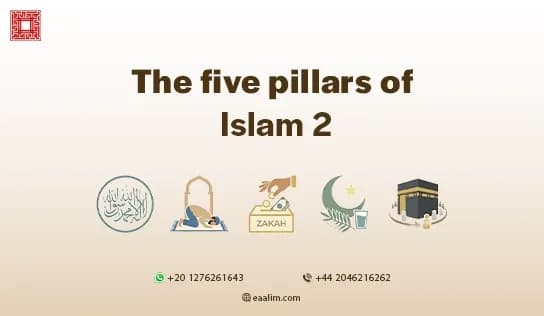
The Five Pillars of Islam — shahāda, ṣalāh, zakat, ṣawm and Hajj — are the framework on which everything else in Islamic practice rests. The Prophet ﷺ identified them in the foundational hadith of ʿUmar ibn al-Khattāb (RA): "Islam is built upon five: that you bear witness that there is no deity worthy of worship except Allah and that Muhammad is His Messenger; that you establish the prayer; that you give zakat; that you fast Ramadan; and that you perform Hajj if you have the means" (Bukhari 8, Muslim 16).
This guide is the British Muslim parent\'s reference: each pillar in summary, the practical UK realities, and how to teach the structure of Islamic practice to children.
The five pillars in summary
1. Shahāda — the testimony of faith
"I bear witness that there is no deity worthy of worship except Allah, and I bear witness that Muhammad is the Messenger of Allah." The first pillar — and the foundational entry into Islam. A person becomes Muslim by sincere recitation of the shahāda. Every Muslim recites it many times daily — in the call to prayer, in salah, in the morning and evening adhkār.
2. Ṣalāh — the five daily prayers
The second pillar — the daily structural anchor of Muslim life. Five prayers at fixed times: Fajr (dawn), Dhuhr (after noon), ʿAṣr (mid-afternoon), Maghrib (sunset), ʿIshāʾ (after twilight). Total obligatory time: approximately 25-40 minutes daily. (See our salah pillar.)
3. Zakat — the obligatory annual charity
2.5% of qualifying wealth held for one full lunar year. Paid to specific categories of recipients named in Quran 9:60 (the poor, the needy, those in debt, etc.). For most British Muslim adults with income above the niṣāb threshold, this is a meaningful annual commitment, typically administered through major UK Muslim charities.
4. Ṣawm — fasting Ramadan
Abstaining from food, drink and intimate relations from dawn to sunset throughout the lunar month of Ramadan. Obligatory on every healthy adult Muslim. (See our Ramadan pillar.)
5. Hajj — the pilgrimage to Makkah
Once-in-a-lifetime obligatory on every Muslim adult with the physical and financial means. Performed during specific days of Dhū al-Ḥijjah. The most physically demanding of the five pillars and for many British Muslims the most emotionally consequential moment of their religious life. (See our Hajj guide.)
How the pillars structure Muslim life
| Frequency | Pillar |
|---|---|
| Continuously | Shahāda — held in the heart and recited often |
| Daily (5 times) | Ṣalāh |
| Annually | Zakat (lunar year) |
| Annually | Ṣawm (Ramadan, lunar month) |
| Once in a lifetime | Hajj |
The combination produces a comprehensive structure. The shahāda sets the orientation; salah establishes the daily anchor; zakat establishes the annual financial commitment; Ramadan establishes the annual personal transformation; Hajj establishes the lifetime journey to the geographical heart of Islam.
The practical UK realities
Salah at work
Equality Act 2010 supports reasonable workplace adjustment for prayer. Most UK employers accommodate.
Zakat calculation
UK Muslim charities (Islamic Relief, Muslim Aid, the National Zakat Foundation specifically) provide zakat calculators and administer collection. The niṣāb (minimum threshold) is calculated at the value of approximately 87.48 grams of gold or 612.36 grams of silver — typically several thousand pounds in current UK rates.
Ramadan fasting
9-19 hours depending on the season. UK Muslim families navigate work, school and family life around the fast. (See our Moral & Spiritual Fasting pillar.)
Hajj from the UK
Approximately 25,000 British Muslims perform Hajj annually. Total cost typically £5,000-10,000 per person depending on package level. UK families typically save towards Hajj for years before performing it.
How to teach the five pillars to British Muslim children
| Age | What to teach |
|---|---|
| 3-5 | Allah is one. We pray. We are kind. We listen to mum and dad about what to eat. |
| 6-8 | The names of the five pillars. Begin teaching them to pray and to fast a few hours of Ramadan. Explain Eid. |
| 9-12 | Full understanding of each pillar. Begin actual practice (full prayer, partial Ramadan fasting, awareness of zakat as family obligation). |
| 13+ | Full responsibility for their own daily salah and Ramadan fast. Beginning awareness of zakat once they have personal income. Family conversations about saving for Hajj. |
Frequently asked questions
Where to go next
For deeper coverage of each pillar, see our specific guides on Salah, Ramadan, Hajj, Monotheism (Shahada foundation). To begin one-to-one Quran lessons covering the practical recitations needed for the pillars, book a free trial lesson.
Commencez votre voyage avec Eaalim dès aujourd'hui !
Essai gratuit


 Share
ShareFrequently Asked Questions
Shahāda (testimony of faith), ṣalāh (five daily prayers), zakat (obligatory annual charity), ṣawm (fasting Ramadan), and Hajj (pilgrimage to Makkah). Identified by the Prophet ﷺ in the foundational hadith of ʿUmar ibn al-Khattāb (Bukhari 8, Muslim 16).
Yes — on every adult Muslim of sound mind. The conditions vary: shahāda is the entry to Islam; salah is daily; zakat is annual on qualifying wealth; ṣawm is the month of Ramadan; Hajj is once-in-a-lifetime if you have the physical and financial means.
Total obligatory time: approximately 25-40 minutes spread across the five fixed windows. With recommended Sunnahs: approximately 50-80 minutes. Practical anchor on the day, not a barrier.
2.5% of qualifying wealth held for one full lunar year. The minimum threshold (niṣāb) is the value of approximately 87.48 grams of gold or 612.36 grams of silver — typically several thousand pounds in current UK rates. UK Muslim charities provide zakat calculators.
No — Hajj is obligatory only on those with both physical and financial means. British Muslims who cannot afford Hajj are not sinning by not performing it; the obligation does not apply.
The classical position is that Hajj on borrowed money you cannot reasonably repay is not recommended. Wait until you have the means.
The Quran provides clear concessions for the elderly, chronically ill, pregnant or breastfeeding women, children, travellers, and women in menstruation. Make-up days when possible; pay fidyah (feeding the poor) for those who cannot make up.
Age 3-5: simple awareness. Age 6-8: the names and simple description; begin teaching prayer and short Ramadan participation. Age 9-12: full understanding and beginning real practice. Age 13+: full personal responsibility.
