


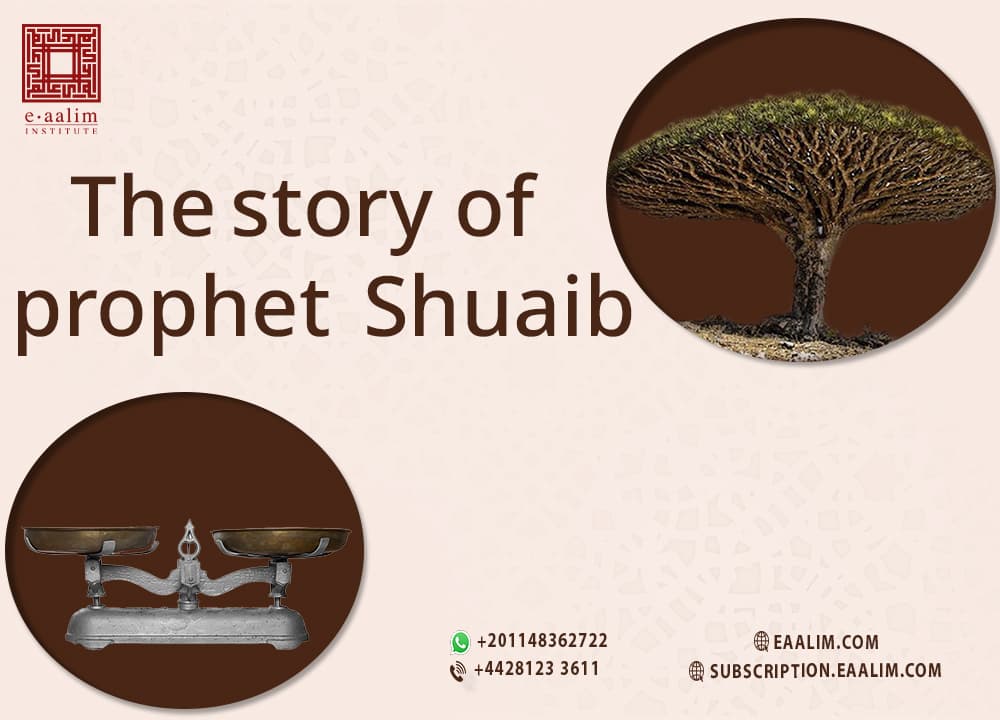
The story of prophet Shuaib
By admin on 12/22/2025
Introduction:
This blog is going to talk about The story of prophet Shuaib. The people of Midian lived at the edge of Syria near the folk of prophet Lot. They were blasphemers worshiping a tree called al-Aykah. Thepeople of Madian had bad financial and commercial transactions. These people treated people badly. Their transactions were unjust. They were highwaymen. They dealt in usury. Allah sent one of them as a prophet, Shuaib. Shuaib was one of the four Arab messengers: Hood, Saleh, Shuaib and Muhammad. Shuaib was the orator of the messengers for his eloquence. The story of prophet Shuaib is very interesting. He called his people to worship Allah Alone. Also, he called them to be fair in dealing with people. When someone mentioned Shuaib , Prophet Mohammad said that Shuaib was the orator of the prophets and messengers.
وَإِلَىٰ مَدْيَنَ أَخَاهُمْ شُعَيْبًا ۚ قَالَ يَا قَوْمِ اعْبُدُوا اللَّهَ مَا لَكُم مِّنْ إِلَٰهٍ غَيْرُهُ ۖ وَلَا تَنقُصُوا الْمِكْيَالَ وَالْمِيزَانَ ۖ إِنِّي أَرَاكُم بِخَيْرٍ وَإِنِّي أَخَافُ عَلَيْكُمْ عَذَابَ يَوْمٍ مُّحِيطٍ
The lineage of prophet Shuaib:
Prophet Shuaib was the son of Madian, ibn Sam, ibn Noah, ibn Idris, ibn Seth, ibn Adam. In addition, he was also the cousin of the prophet Lot. Allah sent prophet Shuaib after prophet Lot to the people of Madyan. Truly, they lived in the town of Madian. Geographically, it lay at the edge of the Arabian peninsula and Syria. Moreover, they were also close to the lake of the people of the prophet Lot. Scholars said it was in present day Jordan. Historically, three people were the great grandchildren of Madian ibn Madyan ibn prophet Ibrahim. They were troublesome people who were stubborn. Their conduct and morals were very bad. Therefore, we should learn the story of prophet Shuaib.
وَإِلَىٰ مَدْيَنَ أَخَاهُمْ شُعَيْبًا ۖ قَالَ يَا قَوْمِ اعْبُدُوا اللَّهَ مَا لَكُم مِّنْ إِلَٰهٍ غَيْرُهُ ۖ قَدْ جَاءَتْكُم بَيِّنَةٌ مِّن رَّبِّكُمْ فَأَوْفُوا الْكَيْلَ وَالْمِيزَانَ وَلَا تَبْخَسُوا النَّاسَ
أَشْيَاءَهُمْ وَلَا تَعْثَوْا فِي الْأَرْضِ بَعْدَ إِصْلَاحِهَا ۚ ذَٰلِكُمْ خَيْرٌ لَّكُمْ إِن كُنتُم مُّؤْمِنِينَ
The people of madian’s morals and ethics:
The people of Madyan were non believing blasphemers. They were highwaymen who robbed passengers. They intimidated passengers and travelers. Their commercial and financial transactions were the worst ever. When they bought something they would pay the least price. Once they sold something, they would charge the highest price for it. The time they weighed something, they would weigh in full if they were the buyers. On the other hand, they would weigh it less than its real weight if they were the sellers. For this reason, Allah sent Shuaib as a messenger of Allah. He was one of them who ordered and called them to amend their way of conduct. Truly, the story of prophet Shuaib includes a lot of lessons to learn. وَيَا قَوْمِ أَوْفُوا الْمِكْيَالَ وَالْمِيزَانَ بِالْقِسْطِ وَلَا تَبْخَسُوا النَّاسَ أَشْيَاءَهُمْ وَلَا تَعْثَوْا فِي الْأَرْضِ مُفْسِدِينَ
They did not learn the lesson of the folk of Lot:
The people of the prophet Lot lived near the people of Madyan. However, the people of Madian did not learn the lesson of the torture of the people of prophet Lot. When prophet Shuaib began to call them to worship Allah, and warned them against doing atrocities, very few weak people followed him. The majority of the people of Madyan did not believe in Shuaib. He reminded them of the torture of the people of his cousin prophet Lot. Allah had suddenly destroyed the people of Lot because of the sins which they committed. The people of the prophet Lot were homosexuals who enjoyed male children. However, the people of prophet Shuaib did not learn that lesson when they took the punishment of Allah unseriously.
وَيَا قَوْمِ لَا يَجْرِمَنَّكُمْ شِقَاقِي أَن يُصِيبَكُم مِّثْلُ مَا أَصَابَ قَوْمَ نُوحٍ أَوْ قَوْمَ هُودٍ أَوْ قَوْمَ صَالِحٍ ۖ وَمَا قَوْمُ لُوطٍ
مِّنكُم بِبَعِيدٍ
Shuaib’s endeavor in calling them:
Prophet Shuaib patiently went on calling them to worship Allah Alone. He advised them to stop committing sins. Only very few and weak people believed in Shuaib. The majority of the people of Shuaib did not believe in him. Nevertheless, Shuaib went on calling them patiently. When Shuaib saw how stubborn his people were, he made dua for Allah to punish and torture his people. The dua of prophets and messengers is not rejected. Consequently, a strong quake and shake hit them. Allah sent sparks and flames of fire on them. Eventually, they all died and were ruined. The people of Shuaib paid for their rejection and blasphemy.
فَكَذَّبُوهُ فَأَخَذَهُمُ الْعَذَابُ يَوْمَ الظُّلَّةِإِنَّهُ كَانَ عَذَابَ يَوْمٍ عَظِيمٍ
Shuaib’s two daughters and Musa:
The story of Shoaib's two daughters and prophet Musa shows us the issue of a woman’s work. When Musa passed the two vulnerable girls who could not supply their sheep with water. This was because the well was overcrowded with tough males. When Musa asked the two girls why they stood in a corner, they said that their father was an old man. Therefore, Musa volunteered to help them. This shows us that it is permissible for a woman to leave her house for work. However, when she goes out for work, she should be properly dressed. In addition, her conduct should be decent and modest. وَلَمَّا وَرَدَ مَاءَ مَدْيَنَ وَجَدَ عَلَيْهِ أُمَّةً مِّنَ النَّاسِ يَسْقُونَ وَوَجَدَ مِن دُونِهِمُ امْرَأَتَيْنِ تَذُودَانِ ۖ قَالَ مَا خَطْبُكُمَا ۖ قَالَتَا لَا نَسْقِي حَتَّىٰ يُصْدِرَ الرِّعَاءُ وَأَبُونَا شَيْخٌ كَبِيرٌ
Shuaib and the people of the great grove:
The Grove was a great tree. The people of Shuaib worship that tree. It was mentioned in the Holy Quran in surah al-Shuraa’ (the poets) (ayah) the people of the great Grove disbelieved the prophets. ((When their brother, Shuaib said don’t you be pious?, truly, I am a clear warner and an honest messenger to you. fear Allah and obey me”)). Some other scholars say that the people of the Grove were subordinates to the people of Shuaib. However, they were included in the call of Shuaib. Allah did not ascribe Shuaib to the Grove. Allah did not say that Shuaib was one of the people of the Grove.
كَذَّبَ أَصْحَابُ الْأَيْكَةِ الْمُرْسَلِينَ. إِذْ قَالَ لَهُمْ شُعَيْبٌ أَلَا تَتَّقُونَ.
إِنِّي لَكُمْ رَسُولٌ أَمِينٌ. فَاتَّقُوا اللَّهَ وَأَطِيعُونِ

The tomb of Shuaib:
The tomb of Shuaib is between Jordan and Palestine. The grave lies to the south of al-Salt city in today’s Jordan. It is in the governorate of al-Balqaa’ . It is in the Hashemite kingdom of Jordan. The tomb truly appears in a detached room inside the mosque which includes Shoaib's body. However, there is also another tomb of prophet Shuaib in the village of Hattin. The Druze range think and believe that the grave contained the dead body of prophet Shuaib. This site is one of the most sacred spots for the Druze range. They are always keen on visiting it.
وَلَمَّا جَاءَ أَمْرُنَا نَجَّيْنَا شُعَيْبًا وَالَّذِينَ آمَنُوا مَعَهُ بِرَحْمَةٍ مِّنَّا وَأَخَذَتِ الَّذِينَ ظَلَمُوا الصَّيْحَةُ
فَأَصْبَحُوا فِي دِيَارِهِمْ جَاثِمِينَ
Commencez votre voyage avec Eaalim dès aujourd'hui !
Essai gratuit


 Share
Share