


Raising Muslim Children in the UK: A British Muslim Parent's Guide (2026)
By aburuqayyah on 12/22/2025
Raising Muslim children in the United Kingdom is not the same job it was a generation ago. British Muslim parents in 2026 are navigating a country that is more religiously mixed than ever, a school system where Islamic identity is visible but not always understood, social media pressures that no previous generation faced, and a wider culture that can feel both welcoming and quietly corrosive depending on the day.
This guide is for British Muslim parents who want to raise children who are confident, loved, spiritually grounded, and at home both in their Islamic faith and in British society. It draws on classical Quranic stories of parenting and pairs them with the specific realities of family life in the UK — Saturday madrasahs, online Quran lessons, school assemblies, Ramadan in a non-Muslim workplace, and the daily small choices that shape a child's character over time.

Children: the greatest blessing, and the greatest responsibility
The Qur'an describes children as one of the adornments of worldly life:
"Wealth and children are the adornment of the life of this world, but the enduring good deeds are better in the sight of your Lord for reward and better for one's hope." — Al-Kahf 18:46
Parenthood is a gift, not a guaranteed path to an easy life. Having children is not an end to struggle — it is the beginning of a new kind of struggle, the one that shapes your own character as much as your child's. For British Muslim families, this truth carries extra weight: the tension between modern UK culture and traditional Islamic upbringing is real, and every family finds their own way through it.
What the Qur'an teaches us about parenting
Before turning to the modern British context, it is worth sitting with a few Quranic stories of parents and children. Each of them illuminates something essential about how Islamic tradition has always understood this relationship.
Adam and the first family
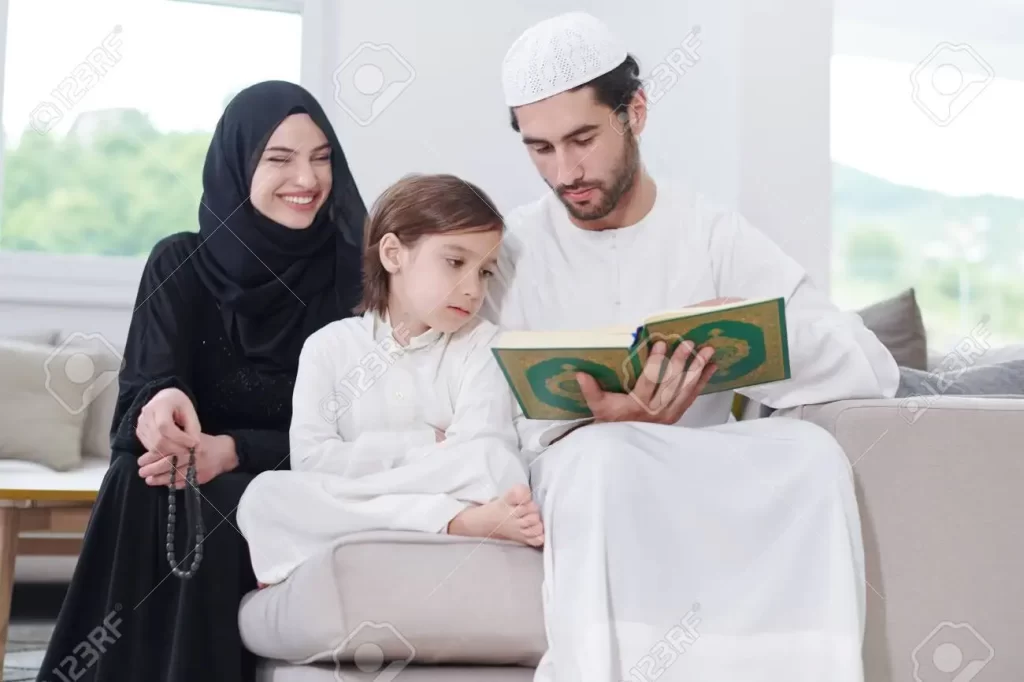
The two sons of Prophet Adam (peace be upon him), Qabil (Cain) and Habil (Abel), lived in the first family in human history. Despite their father's upbringing, they fell into bitter conflict, and Qabil killed Habil out of envy (Al-Ma'idah 5:27–31). The story is a reminder that a Prophet's own children can choose their own paths — and that a righteous parent is not spared the pain of seeing a child go wrong. British Muslim parents who blame themselves every time a child makes a poor choice would do well to remember that even the best parents experience this.
Noah and his son
Prophet Noah (peace be upon him) spent centuries calling his people to the worship of Allah alone. One of his own sons rejected his message, choosing to climb a mountain rather than board the ark. The merciful father pleaded with Allah for his son's survival, and the divine reply was decisive: "O Noah, he is not of your family; indeed, he is one whose work is unrighteous" (Hud 11:46). A child's path is ultimately their own. A parent does everything in their power, prays continuously, and then trusts Allah with the outcome.
Ibrahim and Azar
The reverse situation is also in the Qur'an. Prophet Ibrahim (peace be upon him) grew up in the household of Azar, a man who made and sold idols. Ibrahim's journey was to gently, firmly reject his father's path while continuing to love and pray for him (Maryam 19:41–48). Sometimes the child is the one holding the truth and the parent is mistaken. Islamic parenting is not about control over a child's beliefs — it is about offering them the strongest possible foundation and trusting them to build on it.

Imam Ali's timeless advice
One of the most frequently quoted pieces of parenting advice in classical Islamic literature is attributed to the companion Imam Ali ibn Abi Talib (may Allah be pleased with him):
"Do not raise your children the way your parents raised you; they were born for a different time."
Fourteen centuries later, this advice is strikingly relevant to a British Muslim parent in London, Birmingham, or Manchester raising children in 2026. The core values of Islam are timeless, but the way a family carries them out has to meet the age the children actually live in.

Why the parent-child gap is widening in modern Britain
Every generation of parents feels their children are harder to reach than they themselves were at that age. But the gap facing British Muslim families today has some specific features worth naming clearly.
- Digital saturation. British children spend hours every day on phones, games and social media. Family conversations compete with a firehose of entertainment and validation that did not exist when the parents were young.
- Two cultures at once. A British Muslim child in state school holds two cultural worlds simultaneously — the Islamic home and the wider UK peer group. Each sends different signals about dress, food, relationships, time, money, and what counts as success.
- Loneliness inside the home. Paradoxically, the age of social networking has produced more isolation, not less. Family members can sit in the same living room while being emotionally far apart, each absorbed in their own screen.
- Role model shortage. Mass media and social networks fill with examples of distressed young people; positive Muslim role models exist but are harder to find. Children notice.
- Parental exhaustion. UK parents are working longer hours, commuting further, managing higher living costs, and often juggling extended family responsibilities across continents. The time required for real conversation with children has become scarce.

The main question — who is responsible for what?
When the relationship between a parent and child is strained, it is tempting to assign blame. Three parties are involved, and each carries responsibility.
What parents must remember
- You are parents, not owners. Your child is an independent human being created by Allah with their own fitrah (natural disposition), their own privacy, and their own path.
- Your role is guidance, not control. Classical Islamic scholars have long taught that compulsion in matters of belief and conduct produces the opposite of what the parent wants. Your tools are example, conversation, dua, and patience — in that order.
- Your experience is valuable, but not final. You are older, more experienced, and wiser than your child in most matters. You are also living in a Britain very different from the one your own parents knew. Humility about what you do not fully understand of your child's world is essential.
- Dialogue beats lecture. Preaching, blaming, and reproaching work for a few minutes and then backfire. Real conversation, genuine interest in your child's world, and mutual respect build the trust that everything else rests on.
What children need to understand
- Respect for parents is foundational in Islam. The Qur'an places kindness to parents second only to the worship of Allah (Al-Isra 17:23). This does not disappear because the child is now fourteen or twenty.
- Parents are not always right, but they are almost always loving. Even when the method is flawed, the motive is almost always the child's good.
- You live in a time of unusual pressures. Your parents' generation did not face Instagram, dating culture, TikTok, or a national conversation in which Muslim identity is debated in every news cycle. They are doing their best with incomplete information.

Practical steps for British Muslim parents in 2026
General principles become real only when they are translated into weekly habits. Here are the practices that Muslim families in the UK consistently report as making the biggest difference.
Prioritise Quran and Arabic from an early age
Children who grow up with the Qur'an as a regular, enjoyable presence in the home have an anchor that later pressures struggle to dislodge. The early years (age 5 to 11) are the strongest window. Whether through the local masjid's Saturday madrasah, a structured online programme, or both, a child who learns to read Arabic fluently and recite with proper Tajweed carries that gift for life. Our complete parent's guide to online Quran classes in the UK explains how British families are combining masjid attendance with online private lessons for one-on-one correction.
Protect daily family conversation
One sincere meal together each day, phones down, is the single most effective parenting habit available. It does not need to be elaborate — fifteen minutes of unhurried talk over dinner builds more connection than any lecture. UK families with teenagers report that weekend breakfasts often work better than weekday dinners; find what fits your household.
Be the example you want your child to copy
Children in the UK are sharp observers of inconsistency. A parent who insists on prayer but skips it themselves, who demands modesty but gossips, who talks about generosity but grips the purse — raises children who quickly learn to tune out the words. The Prophet Muhammad (peace be upon him) taught by action at least as much as by speech. Your conduct is the most powerful lesson in your home.
Choose your battles; keep your calm
Not every disagreement is worth a confrontation. Decide in advance which matters are non-negotiable (prayer, honesty, respect, halal food) and which are matters of taste where your child has room to choose. The fewer battles you fight, the more weight your words carry on the ones that matter.
Make dua for your children by name, daily
This is the most overlooked parenting tool and arguably the most powerful. A parent's dua for their child is reported in authentic hadith to be among the prayers Allah does not reject. The Qur'an preserves dozens of duas made by prophets for their children (e.g. Ibrahim in Al-Baqarah 2:128, Zakariya in Aal 'Imran 3:38). Adopt the practice. It costs nothing and changes everything.
Build a British Muslim community your family belongs to
Children who see other Muslim families living the same way they do develop identity without effort. In the UK this means finding a local masjid that feels like a second home, attending Eid gatherings, building friendships with other Muslim families in your area, and giving children the experience of Islam as a living community rather than an isolated household practice. Cities with strong UK Muslim communities (London, Birmingham, Manchester, Leicester, Bradford, Luton, Glasgow) have abundant options; smaller towns often require more deliberate effort.
Engage with your child's school
British schools vary widely in how they handle Muslim identity. Parent evenings, governor positions, RE curriculum consultations, Ramadan accommodations — each is an opportunity to shape the environment your child spends most of their day in. Parents who engage with the school generally find their children's Islamic needs are better met.
When happiness is elusive — a spiritual note
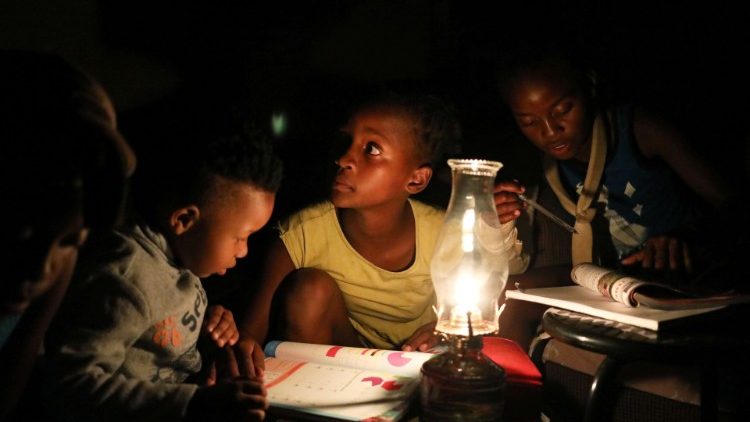
British Muslim families sometimes arrive at a painful realisation: materially they have more than previous generations, yet happiness at home feels harder to hold onto. The Qur'an is clear that durable contentment is a spiritual matter, not a material one. Remembrance of Allah, regular prayer, generosity, and caring for others are the traditional remedies for the specific modern condition of loneliness, melancholy, and worry in the midst of abundance.
Parents who cultivate these practices in themselves find that their children learn them naturally. Parents who rely on material provision alone often discover that provision is not enough.
How Eaalim supports British Muslim families
Eaalim Institute works with British Muslim families in London, Birmingham, Manchester, and every other UK city to deliver live one-on-one online Qur'an and Arabic lessons with Al-Azhar certified teachers. Scheduling is in GMT and BST, built around UK school hours. Pricing is in pounds per month with no hidden fees. Classes cover Qur'an reading, Tajweed, memorisation (Hifz), and Arabic language — tailored to the child's (or adult's) level.
For British families wanting to give their children a strong Islamic foundation alongside full engagement with UK life, live online Quran lessons have become one of the most practical tools available. Our guide to online Quran classes with Tajweed in the UK explains the options, and our online Hifz course guide walks through memorisation for families seriously considering it.
A short final reflection
Raising Muslim children in Britain today is demanding. It is also one of the most meaningful projects a parent can undertake. Every dua you make for your child, every meal you share phone-free, every Qur'an lesson you pay for, every dispute you handle with patience, every prayer you perform in front of them — all of it accumulates. The children your family produces are a living sadaqah jariyah, ongoing charity, whose benefits continue long after you are gone.
The Prophet Muhammad (peace be upon him) said:
"When a person dies, his deeds come to an end except for three: ongoing charity, beneficial knowledge, or a righteous child who prays for him." — Sahih Muslim 1631
A righteous child is not born; they are raised. And in Britain in 2026, they are raised with deliberate, patient, spiritually grounded effort — not by accident.
Book a free trial Quran lesson for your child
If you are ready to begin giving your child a structured Islamic foundation alongside everything else they learn in the UK, book a free 30-minute trial lesson with Eaalim. An Al-Azhar certified teacher will meet your child online, assess their Arabic reading and Tajweed, and show you exactly what the first month of regular lessons would look like. The trial is a real lesson, not a sales call, scheduled in UK time.
ابدأ رحلتك مع إي عاليم اليوم!
ابدأ تجربتك المجانية


 Share
ShareFrequently Asked Questions
With patience, consistency, and deliberate spiritual grounding. The core Islamic principles (prayer, honesty, respect, love, dua) remain unchanged, but the delivery must fit British family life — protected family conversation, Quran and Arabic education from an early age, engagement with UK schools, building connections with the local Muslim community, and being the example you want your child to follow rather than just preaching it.
The Qur'an describes children as an adornment of worldly life (Al-Kahf 18:46) but reminds us that lasting good deeds matter more. Stories of Adam's sons, Prophet Noah, and Prophet Ibrahim show that a child's path is ultimately their own. A parent's role is guidance, example, and continuous dua — not control. Kindness to parents is placed second only to worship of Allah (Al-Isra 17:23).
Five specific pressures on British Muslim families: digital saturation (hours of daily screen time), two cultures at once (Islamic home plus UK school peer group), loneliness inside the home despite social networking, a shortage of visible positive Muslim role models in mainstream media, and parental exhaustion from long UK working hours and high living costs. Each makes real conversation harder and more important.
"Do not raise your children the way your parents raised you; they were born for a different time." This classical counsel is strikingly relevant for British Muslim parents today. The core values of Islam are timeless, but the way a family carries them out has to meet the age the children actually live in.
Seven consistent recommendations: prioritise Quran and Arabic education early (age 5–11 is strongest); protect daily family conversation (15 minutes phone-free); be the example you want your child to copy; choose your battles; make dua for your children by name daily; build a British Muslim community your family belongs to; and engage with your child's school via parent evenings, governor positions, and RE curriculum consultations.
Online Quran lessons with Al-Azhar certified teachers provide the one-on-one Tajweed correction and structured progression that the local Saturday madrasah often cannot, while still allowing families to maintain community connections at the masjid. For UK families, scheduling in GMT/BST around school hours and pricing in pounds per month makes online Quran education a practical complement to wider Islamic upbringing.
The two are not in conflict when both are taken seriously. Support your child's full engagement with state education while grounding them in Quran, Arabic, and Islamic practice at home. Engage actively with the school (parent evenings, governor roles, RE consultations, Ramadan accommodations) to shape the environment rather than just react to it. Children who see their parents engaged with both worlds tend to integrate both confidently.
No. Teenagers who feel their parents are willing to listen, respect their growing independence, and maintain genuine dialogue (rather than monologue) often re-engage even after a difficult period. The tools remain the same: sincere conversation, patience, fewer lectures, more questions, continuous dua, and being the example rather than demanding it. Outcomes are in Allah's hands; the parent's job is to keep the door open.
