


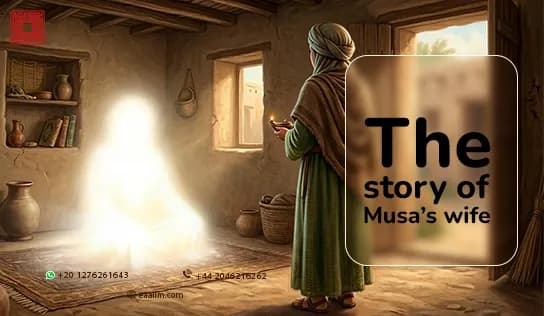
The story of Musa’s wife
By admin on 12/22/2025
story of Musa’s wife
Introduction
Basically, the story of Prophet Musa (Moses, peace be upon him) is one of the most profound and inspiring narratives in the Qur’an. First of all, one of the significant figures in his life was his wife, the daughter of Prophet Shu’ayb (peace be upon him). Truly, her modesty, wisdom, and unwavering support played a critical role in shaping the life of one of the greatest prophets. Therefore, in this blog, we will highlight her character, her virtues, and the valuable lessons her story teaches us. Therefore, we should learn the story of Musa’s wife.
Who Was the Wife of Musa?
Historically, the wife of Musa is the daughter of Prophet Shu’ayb, according to many scholars. Strangely, she first encountered Musa when he fled from Egypt and arrived at the well in Midian. Musa noticed two women standing aside with their flock and intervened to help them. Therefore, the story of Musa’s wife is very interesting. We should learn it.
وَلَمَّا وَرَدَ مَآءَ مَدْيَنَ وَجَدَ عَلَيْهِ أُمَّةًۭ مِّنَ ٱلنَّاسِ يَسْقُونَ وَوَجَدَ مِن دُونِهِمُ ٱمْرَأَتَيْنِ تَذُودَانِ ۖ قَالَ مَا خَطْبُكُمَا ۖ قَالَتَا لَا نَسْقِى حَتَّىٰ يُصْدِرَ ٱلرِّعَآءُ ۖ وَأَبُونَا شَيْخٌۭ كَبِيرٌۭ
Surat Al-Qasas/23
Obviously, her modesty and wisdom shone brightly in her interactions, and it was through her that Musa came to meet her father, Prophet Shu’ayb.
Key Traits of Musa’s Wife
Modesty and Decency:
Clearly, her modesty is one of her defining characteristics. Therefore, even when approaching Musa to invite him to her father’s home, she carried herself with dignity and respect.
فَجَآءَتْهُ إِحْدَىٰهُمَا تَمْشِى عَلَى ٱسْتِحْيَآءٍۢ قَالَتْ
Surat Al-Qasas/25
Clearly, this highlights the value of maintaining modesty in speech, action, and behavior.
Wisdom and Sound Judgment:
That is why the daughter of Shu’ayb displayed great wisdom when she suggested to her father that Musa be hired for his strength and trustworthiness. Quickly, she recognized the qualities of a righteous man and did not hesitate to give her opinion.
قَالَتْ إِحْدَىٰهُمَا يَـٰٓأَبَتِ ٱسْتَـْٔجِرْهُ ۖ إِنَّ خَيْرَ مَنِ ٱسْتَـْٔجَرْتَ ٱلْقَوِىُّ ٱلْأَمِينُ
Surat Al-Qasas/26
Support and Partnership:
Later, as the wife of Musa, she stood by him during the years of service to her father. Naturally, her role reflects the importance of mutual support and understanding between spouses, especially in challenging times.
Contentment and Simplicity:
Truly, the marriage of Musa to the daughter of Shu’ayb was not marked by wealth or luxury. Instead, it was based on righteousness and agreement. Consequently, Musa worked for Shu’ayb for either eight or ten years as part of his marriage contract
The story of Musa’s wife
Lessons to Learn from Musa’s Wife
The Importance of Modesty:
Really, her story shows that modesty is a beautiful and essential virtue for every woman, as it reflects dignity, respect, and strength of character.
Recognizing Good Character:
Practically, the wife of Musa and her father teach us that when choosing a spouse, qualities like trustworthiness, strength, and good character are more important than wealth or status.
The Role of Women in Decision-Making:
Logically, by suggesting that Musa be hired, the daughter of Shu’ayb shows how women’s wisdom and insight can guide their families toward wise decisions.
Supporting One’s Partner:
Really, her life with Musa highlights the value of standing beside one’s spouse with patience and dedication, building a strong foundation for a family
Conclusion
Therefore, the story of Musa’s wife in the Qur’an is a timeless example of modesty, wisdom, and support. Really, her actions remind us of the importance of good character, trust in Allah’s plan, and the power of strong, supportive relationships.
For parents and learners in the UK and US, helping children with the story of Musa’s wife can often feel challenging due to time constraints and lack of structured guidance. That’s why we’ve created a simple, interactive solution that allows you and your child to learn about the story of Musa’s wife in a smart and engaging way. Your child can join E-aalim, learn the Quran, Islamic studies and learn about. the story of Musa’s wife. This method strengthens focus, builds confidence, and turns Quran Tafseer, reading and memorization into an enjoyable daily habit — all from the comfort of your home.
Start your child’s journey in learning about
the story of Musa’s wife online with the E-aalim today with our interactive technique and expert guidance. We offer 2 FREE trial classes with qualified efficient Islamic studies’ teachers from Al-Azhar, so you can choose the perfect teacher for your child.
Book your 2 free trials now and see the difference from the first lesson!
ابدأ رحلتك مع إي عاليم اليوم!
ابدأ تجربتك المجانية


 Share
ShareFrequently Asked Questions
The most significant figures in prophet Musa’s life was his wife.
Her story shows that modesty is very important for every woman.
Musa worked for Shu’ayb for 8 or 10 years.
