


Top ten mosques “ masjid” in the world.
By aburuqayyah on 12/22/2025
The mosque " Masjid " has a great place in Islam as well as the hearts of Muslims
so As the first mosque " Masjid " was established for people from the beginning of creation in the era of Adam, peace be upon him
{إِنَّ أَوَّلَ بَيْتٍ وُضِعَ لِلنَّاسِ لَلَّذِي بِبَكَّةَ مُبَارَكًا وَهُدًى لِلْعَالَمِينَ} surah Al Imran 96
(Verily, the first House (of worship) appointed for mankind was that at Bakkah (Makkah), full of blessing, and a guidance for Al-'Alamîn (the mankind and jinns)). surah Al Imran 96
And Prophet Ibrahim, peace be upon him, completed it
and authorize it
{وَإِذْ بَوَّأْنَا لِإِبْرَاهِيمَ مَكَانَ الْبَيْتِ أَنْ لَا تُشْرِكْ بِي شَيْئًا وَطَهِّرْ بَيْتِيَ لِلطَّائِفِينَ وَالْقَائِمِينَ وَالرُّكَّعِ السُّجُودِ}
{وَأَذِّنْ فِي النَّاسِ بِالْحَجِّ يَأْتُوكَ رِجَالًا وَعَلَى كُلِّ ضَامِرٍ يَأْتِينَ مِنْ كُلِّ فَجٍّ عَمِيقٍ} surah al hajj 26,27
(And (remember) when We showed Ibrâhim (Abraham) the site of the (Sacred) House (the Ka'bah at Makkah) (saying):
"Associate not anything (in worship) with Me, [Lâ ilâha ill-Allâh
(none has the right to be worshipped but Allâh Islâmic Monotheism],
and sanctify My House for those who circumambulate it, and those who stand up for prayer,
also those who bow (submit themselves with humility and obedience to Allâh), and make prostration (in prayer, etc.);")
(And proclaim to mankind the Hajj (pilgrimage).
They will come to you on foot and on every lean camel,
also they will come from every deep and distant (wide) mountain highway (to perform Hajj).)
surah al hajj 26,27
Likewise, it is the first thing that the Messenger of ALLAH , Muhammad, peace and blessings be upon him, built when he went to Mecca
also It served as a center for managing the affairs of Muslims' lives
and also A social institution, an educational school, and an economic authority
So did the Muslims
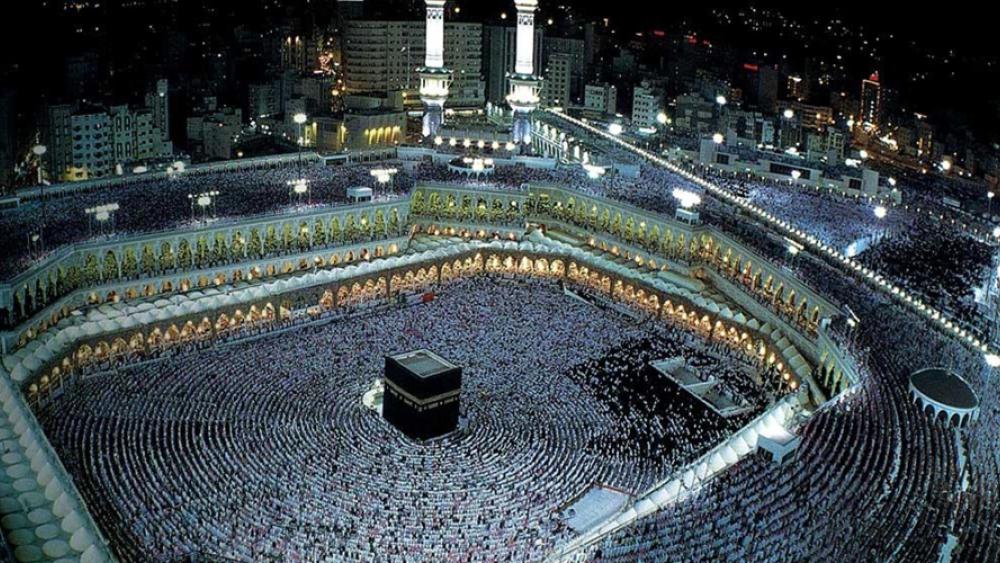
1.the mosque “ Masjid “ al-Haram
A. The date of construction of the mosque
The first angels built
Then Adam, peace be upon him
Then the Prophet of God Ibrahim, and with him, the Prophet of God, Ismail, peace be upon them, rebuilt it
B. The place of the mosque
The mosque is located in the Arabian Peninsula
In the country of the Two Holy Mosques, in mecca Saudi Arabia
C. About the mosque
The greatest and holiest building on the face of the earth since the beginning of history until the Day of Resurrection
It is the first mosque in Islam
The mandate of the Muslim pilgrimage
Pilgrimage to it is an obligation and one of the pillars of Islam
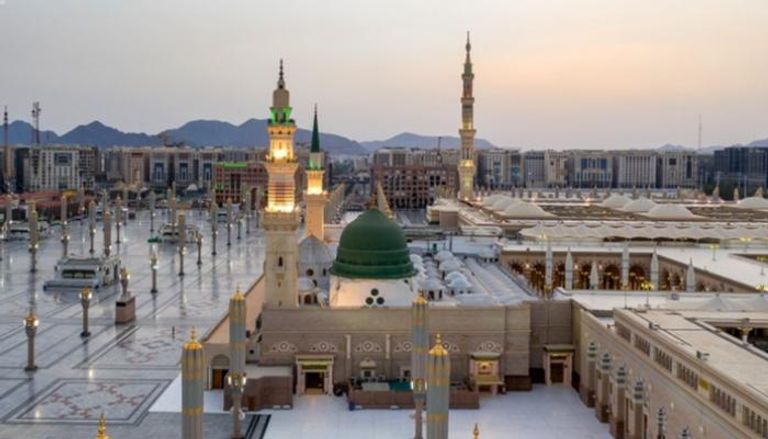
2. the mosque Al-”Masjid” an-Nabawi
A. The date of construction of the mosque
It was built during the era of the Messenger of Allah, Muhammad, peace and blessings be upon himand
and the Rashidun (622-660 CE or 1-40 AH)
B. The place of the mosque
The mosque is located in the Arabian Peninsula
In the country of the Two Holy Mosques, al madinah Saudi Arabia
C. About the mosque
The second of the Two Holy Mosques
The mosque was built by Muhammad in 622 CE (1 AH) after his arrival in Medina.
Riding a camel called Qaswa, he arrived at the place where this mosque was built, which was being used as a burial ground.
Refusing to accept the land as a gift from the two orphans, Sahl and Suhayl, who owned the land,
so he bought the land which was paid for by Abu Ayyub al-Ansari and it took seven months to complete the construction of the mosque.
It measured 30.5 m × 35.62 m (100.1 ft × 116.9 ft).
The roof which was supported by palm trunks was made of beaten clay and palm leaves.
It was at a height of 3.60 m (11.8 ft).
also The three doors of the mosque were the "Gate of Mercy" (Bab ar-Rahmah ) to the south, "Gate of Gabriel'' (Bab Jibril) to the west and "Gate of Women" ( Bab Nisa ) to the east.
At this time point in the history of the Mosque, the qibla wall was facing north to Jerusalem, and al-Suffah was along the northern wall.

3. Al masjid Al-Aqsa Mosque
A. The date of construction of the mosque
On the authority of Abu Dharr that he said :
I said: O Messenger of Allah! Any mosque built in the ground first?
He said : The Grand Mosque.
I said: Then which?
He said: Al-Aqsa Mosque.
I said: How many between them?
He said: Forty years.
B. The place of the mosque
ocated in Palestine
It covers an area of approximately 144,000 square metres,
and also includes the Dome of the Rock, Al-Qibli Mosque, Al-Marwani Mosque, Bab Al-Rahma Mosque,
and also several other landmarks, amounting to 200 landmarks.
Al-Aqsa Mosque is located on a small plateau called the "Moorea Plateau", and the rock is the highest point in it, and it is located in its heart.
C. About the mosque
The first of the two Qiblahs and the third of the Two Holy Mosques
also It is the journey of the Messenger, may Allah bless him and grant him peace, on the two journeys Al-Isra and Al-Miraj
{سُبۡحَٰنَ ٱلَّذِيٓ أَسۡرَىٰ بِعَبۡدِهِۦ لَيۡلٗا مِّنَ ٱلۡمَسۡجِدِ ٱلۡحَرَامِ إِلَى ٱلۡمَسۡجِدِ ٱلۡأَقۡصَا ٱلَّذِي بَٰرَكۡنَا حَوۡلَهُۥ لِنُرِيَهُۥ مِنۡ ءَايَٰتِنَآۚ إِنَّهُۥ هُوَ ٱلسَّمِيعُ ٱلۡبَصِيرُ 
surah al isra 1
(Glorified (and Exalted) be He (Allâh) [above all that (evil) they associate) surah al isra 1

4.the mosque Masjid al-Qiblatayn
A. The date of construction of the mosque
Upon the triumphant return of the Messenger of Allah Muhammad, may Allah bless him and grant him peace,
to Mecca in the year 630 CE,
so The mosque is among the earliest mosques in Medina and was built by Sawad ibn Ghanam ibn Ka'ab al-Ansari in the Islamic year 2 AH
B. The place of the mosque
The mosque is located in the Arabian Peninsula
In the country of the Two Holy Mosques, al Madinah Saudi Arabia
C. About the mosque
The name of the mosque dates back to the life of the Messenger of Allah, Muhammad, may Allah bless him and grant him peace.
When his companions named him after an event that occurred on the fifteenth of Sha’ban of the same year,
When the Messenger of Allah received a revelation in the noon prayer from Allah commanding him to take the Kaaba as the qiblah instead of Al-Aqsa.
{قَدْ نَرَى تَقَلُّبَ وَجْهِكَ فِي السَّمَاءِ فَلَنُوَلِّيَنَّكَ قِبْلَةً تَرْضَاهَا فَوَلِّ وَجْهَكَ شَطْرَ الْمَسْجِدِ الْحَرَامِ وَحَيْثُ مَا كُنْتُمْ فَوَلُّوا وُجُوهَكُمْ شَطْرَهُ وَإِنَّ الَّذِينَ أُوتُوا الْكِتَابَ لَيَعْلَمُونَ أَنَّهُ الْحَقُّ مِنْ رَبِّهِمْ وَمَا اللَّهُ بِغَافِلٍ عَمَّا يَعْمَلُونَ}surah al baqarah 144
(Verily! We have seen the turning of your (Muhammad's SAW) face towards the heaven.
Surely, We shall turn you to a Qiblah (prayer direction) that shall please you, so turn your face in the direction of Al-Masjid- al-Harâm (at Makkah).
And wheresoever you people are, turn your faces (in prayer) in that direction.
Certainly, the people who were given the Scriptures (i.e,Jews and the Christians) know well that, that (your turning towards the direction of the Kaaba at Makkah in prayers)
is the truth from their Lord,And Allâh is not unaware of what they do.)
surah al baqarah 1445.Mosque of Amr ibn al-As
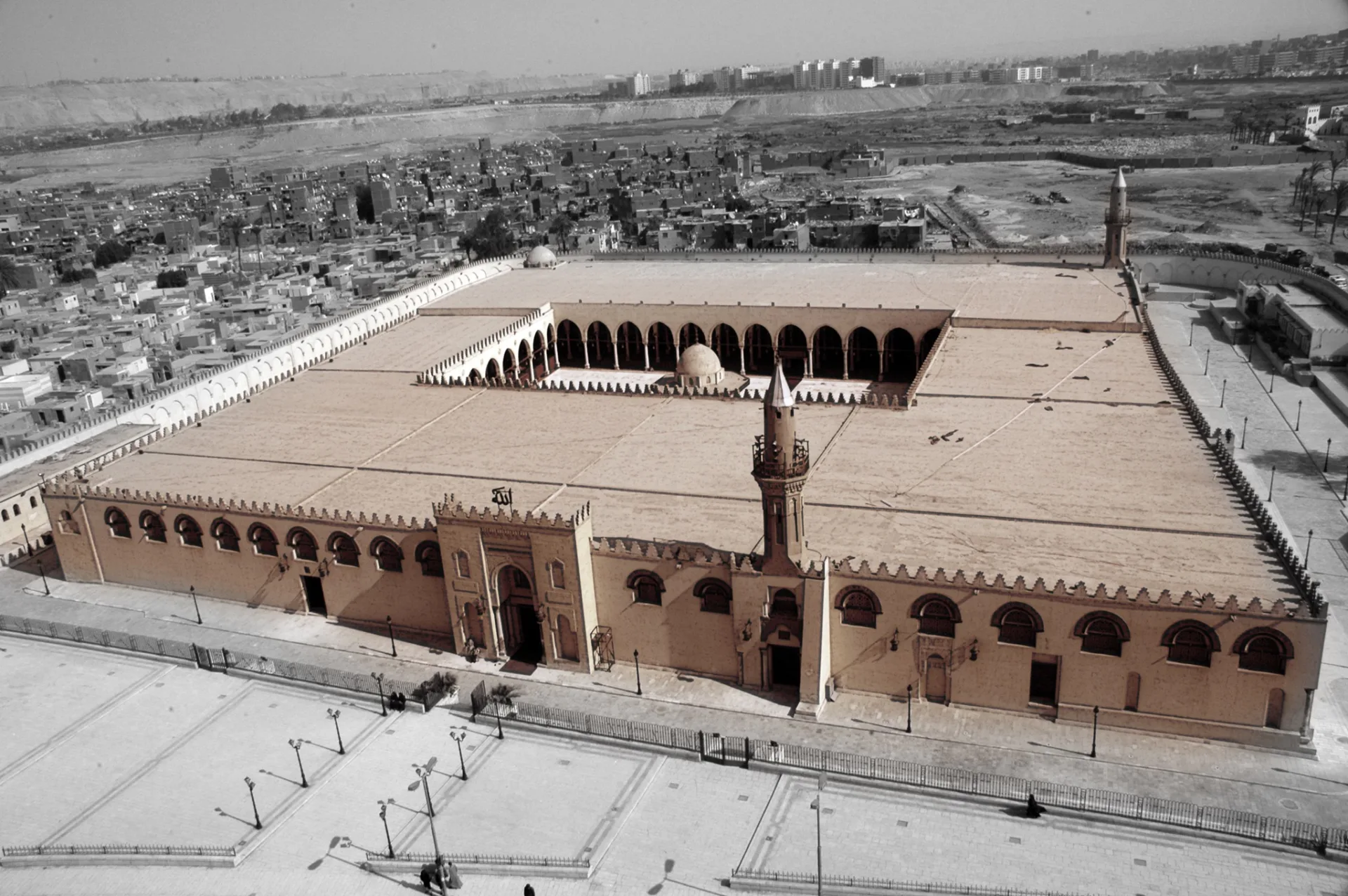
5.Mosque of Amr ibn al-As
A. The date of construction of the mosque
It was originally built in 641–642 AD, as the center of the newly founded capital of Egypt, Fustat.
so The original structure was the first mosque ever built in Egypt and the whole of Africa.
For 600 years, the mosque was also an important center of Islamic learning until Al-Muizz's Al-Azhar Mosque in Islamic Cairo replaced it.
Through the twentieth century, it was the fourth largest mosque in the Islamic world.
B. The place of the mosque
In Egypt “ Misr ” the Cairo city in al-Fustat .
C. About the mosque
According to tradition, the original location was chosen by a bird.
Amr ibn al-As, by order of Caliph Umar, was the Arab general that conquered Egypt from the Romans.
In 641, before he and his army attacked their capital city of Alexandria (at the northwestern part of the Nile river delta),
Amr had set up his tent on the eastern side of the Nile, at the southern part of the delta.
As the story is told, shortly before Amr set off to battle, a dove laid an egg in his tent.
When Amr returned victorious, he needed to choose a site for a new capital city, since Umar had decreed that it could not be in far-away Alexandria.
So Amr declared the site of the dove's egg sacred, and made it the center of his new city, Fustat, or Misr al-Fustat, "City of the Tents". Later, the Mosque of Amr was built on the same location

6. Al masjid Al-Azhar Mosque
A. The date of construction of the mosque
Jawhar ordered the construction of a congregational mosque for the new city and work commenced on April 4, 970
The mosque was completed in 972 and the first Friday prayers were held there on June 22, 972 during Ramadan
B. The place of the mosque
in Egypt “Masr” in The city of Cairo
C. About the mosque
The city of Cairo was, established by the Fatimid general Jawhar al- siqillī,
on behalf of his then-master Caliph al-Mu'izz, following the Fatimid conquest of Egypt in 969.
It was, originally named al-Manṣūriyya after the prior seat of the Fatimid caliphate, al-Mansuriya in modern Tunisia.
The mosque, first used in 972, may have initially been named Jāmiʿ al-Manṣūriyya"the mosque of Mansuriyya" as was common practice at the time.
It was al-Mu'izz who renamed the city al-Qāhira "Cairo", meaning, "the Victorious".
The name of the mosque thus became Jāmiʿ al-Qāhira, the first transcribed in Arabic sources.
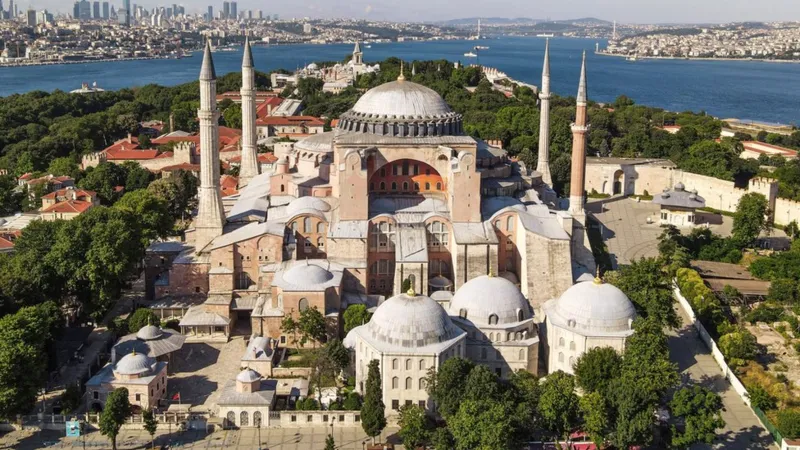
7. The Mosque “Masjid” “Hagia Sophia” Muhammed Al fateh
A. The date of construction of the mosque
Constantinople fell to the attacking Ottoman forces on 29 May 1453.
Sultan Mehmed II entered the city and performed the Friday prayer and khutbah (sermon) in Hagia Sophia,
So this action marked the official conversion of Hagia Sophia into a mosque.
B. The place of the mosque
in the Turkey In the Istanbul city
C. About the mosque
When Mehmed and his entourage entered the church, he ordered that it be, converted into a mosque immediately.
One of the ʿulamāʾ (Islamic scholars) present climbed onto the church's ambo
and recited the shahada ("There is no Allah but Allah, and Muhammad is his messenger"),
thus marking the beginning of the conversion of the church into a mosque.
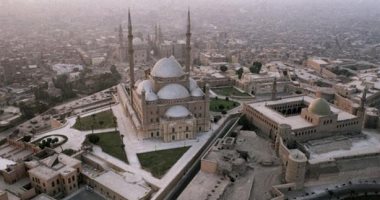
8. The Mosque “masjid” of Muhammad Ali
A. The date of construction of the mosque
The mosque was built on the site of old Mamluk buildings in Cairo's Citadel between 1830 and 1848,
B. The place of the mosque
A mosque situated in the Citadel of Cairo in Egypt
C. About the mosque
The Great Mosque of Muhammad Ali Pasha or Alabaster Mosque is, a mosque situated in the Citadel of Cairo in Egypt
Mosque was, commissionedby Muhammad Ali Pasha between 1830 and 1848.
Situated on the summit of the citadel, this Ottoman mosque,
the largest to be, built in the first half of the 19th century, is, with its animated silhouette and twin minarets, the most visible mosque in Cairo.
also The mosque was, built in memory of Tusun Pasha, Muhammad Ali's eldest son, who died in 1816.
This mosque, along with the citadel, is, one of the landmarks and tourist attractions of Cairo
and is, one of the first features to be, seen when approaching the city from any direction.
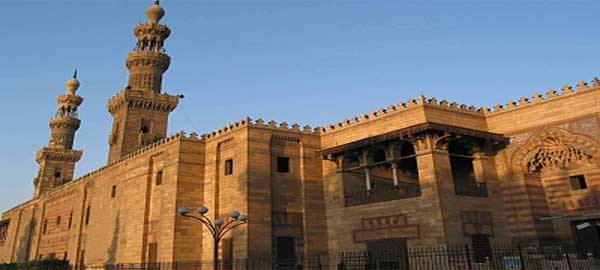
9. The” Masjid ” Mosque - Madrasa of Sultan Barquq
A. The date of construction of the mosque
The complex was, constructed in 1384-1386 CE (786 to 788 AH),
B. The place of the mosque
in Egypt “misr”
The complex is, situated in the traditional area, of Muizz Street.
Along with the Complex of Sultan Qalawun and the Madrasa of al-Nasir Muhammad, with which
also it is contiguous, it forms one of the greatest arrangements of Mamluk monumental architecture in Cairo, in the section of al-Mu'izz street known as Bayn al-Qasrayn.
C. About the mosque
Like most Mamluk foundations, Barquq's religious complex served several functions at a time.
So The foundation deed states that the complex includes a Friday mosque,
and also a madrasa that taught the four Sunni madhhabs for 125 students, and a khanqah (a monastery-type institution for Sufis) for 60 Sufis.
The overall design and decoration resembles that of the larger and earlier Mosque-Madrasa of Sultan Hassan.
The building also includes a mausoleum whose dome is visible from the street.
Barquq had the remains of his father moved and buried in the mausoleum of his complex when it was, completed.
Barquq himself, however, later wished to be, buried in a new mausoleum in the Northern Cemetery of Cairo,
so a task completed by his son
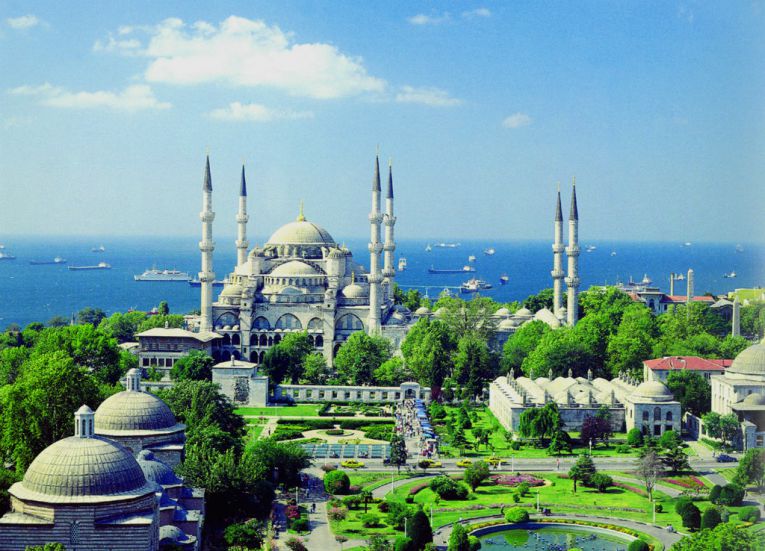
10. Sultan Ahmed Mosque “ Masjid “
A. The date of construction of the mosque
It was, constructed between 1609 and 1616 during the rule of Ahmed I
B. The place of the mosque
In the Turkey In the Istanbul city
mosque was, built on the site of the palace of the Byzantine emperors, in front of the basilica Hagia Sophia (at that time, the primary imperial mosque in Istanbul)
and the hippodrome, a site of significant symbolic meaning as it dominated the city skyline from the south.
Big parts of the south shore of the mosque rest on the
C. About the mosque
Sultan Ahmed Mosque (Turkish: Sultan Ahmet Camii), also known as the Blue Mosque, is an Ottoman-era historical imperial mosque located in Istanbul, Turkey.
A functioning mosque, it also attracts large numbers of tourist visitors.
It was, constructed between 1609 and 1616 during the rule of Ahmed I.
Its Külliye contains Ahmed's tomb, a madrasah and a hospice.
also Hand-painted blue tiles adorn the mosque’s interior walls,
and at night the mosque is, bathed in blue as lights frame the mosque’s five main domes, six minarets and eight secondary domes.
It sits next to the Hagia Sophia, the principal mosque of Istanbul until the Blue Mosque's construction and another popular tourist site.
The Blue Mosque was, included in the UNESCO World Heritage Site list in 1985 under the name of "Historic Areas of Istanbul.
ابدأ رحلتك مع إي عاليم اليوم!
ابدأ تجربتك المجانية


 Share
Share