

Online Aqeedah Course UK: Authentic Islamic Belief for British Muslim Families (2026)
Live one-on-one online Aqeedah course for British Muslim families. Build confident belief in a non-Muslim majority country — answer atheist arguments, explain Trinity vs Tawhid, ground your child's faith for British school. Al-Azhar certified scholars on UK GMT/BST time slots. Free trial.
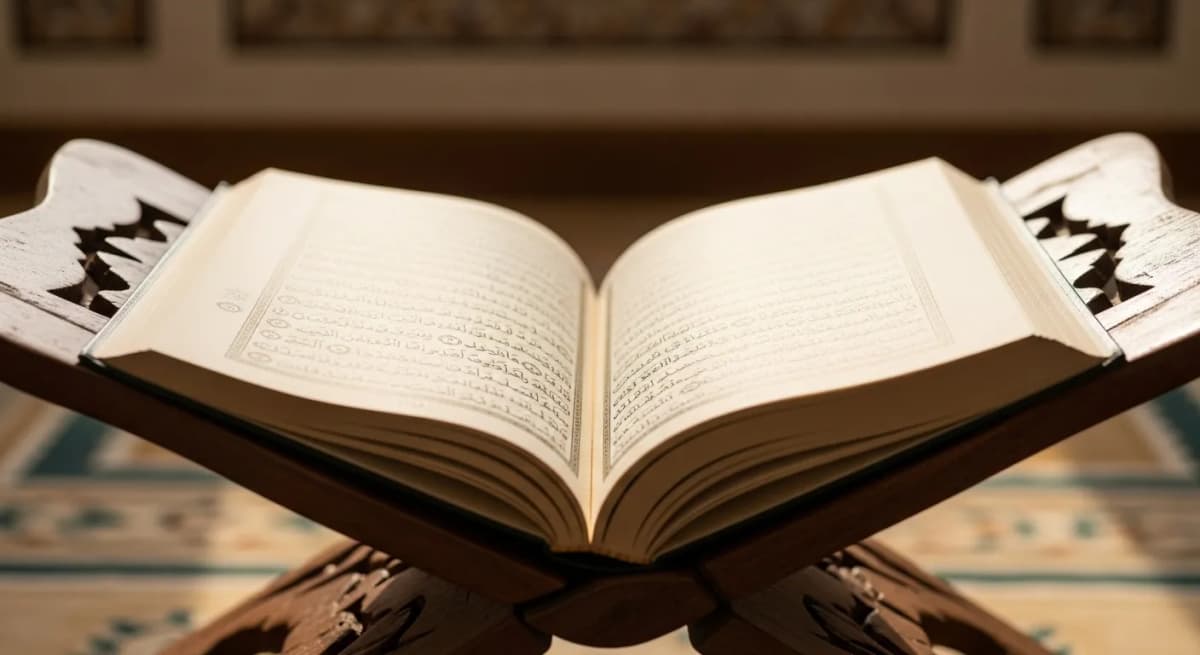
For British Muslim families, Aqeedah (Islamic belief) is not abstract theology — it is the daily defence of identity in a country where most people aren't Muslims. Your seven-year-old kid comes home from a Birmingham primary school asking why their friend Liam doesn't believe in God. Your fourteen-year-old kid has just sat through a Year 9 RE lesson explaining the Christian Trinity and is quietly wondering if it makes sense. Your university-age daughter at Edinburgh is reading Richard Dawkins for an essay and feels her faith wobble. Your husband's atheist colleagues at lunch ask, gently and politely, "But why do you believe in any of it?" — and he doesn't have a clear answer.
Our online Aqeedah course gives British Muslim families clear, evidence-based answers — taught one-on-one by Al-Azhar certified scholars on UK time slots. The curriculum follows the classical Sunni text Al-'Aqeedah al-Tahawiyyah by Imam Abu Ja'far al-Tahawi (used by all four madhahib for over 1,000 years), supplemented with answers to the specific arguments — atheist, Christian, secular humanist — that British Muslims actually meet at school, university and work.
Why Aqeedah matters for British Muslim families
Aqeedah (العقيدة) means firm belief, conviction. In Islamic scholarship it is the science of the six pillars of faith (arkan al-iman): belief in Allah, His angels, His books, His messengers, the Last Day, and divine decree (qadar). Without Aqeedah, every other Islamic practice — Salah, Zakah, Hajj, Fiqh, even the Qur'an itself — sits on a shifting foundation. For British Muslim families, that foundation needs to be deeper, not shallower, than for Muslims in Muslim-majority societies — because the British Muslim is daily questioned in ways an Egyptian or Saudi Muslim rarely is.
This course covers:
• Tawhid (Islamic monotheism): the three categories (Tawhid al-Rububiyya, al-Uluhiyya, al-Asma' wa-l-Sifat) and how to explain to a British Christian friend why Tawhid is incompatible with the Trinity, without rudeness.
• The Prophets and Messengers: belief in all 25 named Prophets — including 'Isa, Musa, Ibrahim, Nuh — and why this overlap with Christianity is a starting point for dialogue, not a contradiction.
• The angels and the unseen (al-ghayb): Jibril, Israfil, Mika'il, the recording angels, jinn, the soul (ruh), and how to give a British Muslim child a clean, evidence-based answer when their friend says "that sounds like Harry Potter".
• The Books of Allah: belief in the Torah, Injil, Zabur, Suhuf and the Qur'an — including a sober, scholarly account of how the previous scriptures were preserved versus how the Qur'an was preserved.
• The Last Day, Heaven, Hell, and divine decree (qadar): the most-asked questions on a British university campus today — "how can a merciful God send people to hell?", "what about the problem of evil?", "what about pre-destination versus free will?"
Real Aqeedah questions British Muslim children bring home:
• "Liam said the Big Bang explains everything — so why do we need Allah?"
• "In RE the teacher said all religions are basically the same. Are we just choosing one for cultural reasons?"
• "My friend's family is Christian and they say 'Jesus is God'. Why do we say he was just a Prophet?"
• "How do we know the Qur'an is from Allah and not from Prophet Muhammad ﷺ himself?"
• "If Allah knows what we'll do, why does He still test us?"
“So know that there is no deity worthy of worship except Allah.” (Surah Muhammad 47:19)
Why British Muslim families choose Eaalim for Aqeedah
Three British Muslim audiences this Aqeedah course is for
British Muslim parents who want to give their children a faith that survives a UK state school education, a Russell Group university, and a working life surrounded by atheist and secular colleagues. The course gives parents the language and the evidence so they can answer their child's questions on the school run — instead of saying "I'll ask the imam" and quietly hoping the child forgets the question.
British Muslim teenagers and university students — the age group most exposed to atheist arguments, comparative-religion modules, and "deconversion" YouTube channels. The course meets these arguments head-on, with calm, scholarly responses rooted in the Qur'an, the Sunnah, and a respectful engagement with Western philosophical objections (Dawkins, Hitchens, Sam Harris).
British reverts to Islam — particularly in the first 1–3 years after taking shahada — who often face hostile family questioning at Christmas, awkward conversations with atheist friends, and the quiet personal doubts that all reverts pass through. The course structures the foundation that lets a revert say la ilaha illa Allah with full understanding rather than imitation.
Real classical evidence used in this course:
• Tawhid: قُلْ هُوَ اللَّهُ أَحَدٌ (Say: He is Allah, the One — Surah Al-Ikhlas 112:1) — a four-ayah surah equal in reward to a third of the Qur'an, because it states Tawhid in its purest form.
• The Prophet's ﷺ rejection of Trinity-style claims: لَّمْ يَلِدْ وَلَمْ يُولَدْ (He neither begets nor is begotten — Surah Al-Ikhlas 112:3) — and the parallel verse وَلَمْ يَكُن لَّهُ كُفُوًا أَحَدٌ (And there is none equal to Him — 112:4).
• The honour of the Messengers: لَا نُفَرِّقُ بَيْنَ أَحَدٍ مِّن رُّسُلِهِ (We make no distinction between any of His Messengers — Al-Baqarah 2:285) — an aqeedah Christians find striking when explained calmly.
• The reality of the unseen: وَيُؤْمِنُونَ بِالْغَيْبِ (And they believe in the unseen — Al-Baqarah 2:3) — the verse that defines what it means to be a Muslim in a sceptical age.
• Free will and divine decree: إِنَّا كُلَّ شَيْءٍ خَلَقْنَاهُ بِقَدَرٍ (Indeed, We have created everything with measure — Al-Qamar 54:49) — read alongside the hadith of Jibril on the six pillars of faith.
What you'll be able to do by the end of the Aqeedah course
Explain Tawhid clearly to a non-Muslim friend
Ground your child's faith for British school life
Read classical Aqeedah texts with confidence
What Our Clients Say
Hear from those who have experienced the peace of learning with Eaalim.
Related Articles
Ready to start the online Aqeedah course in the UK?
Book your free 30-minute trial today — a real first lesson with an Al-Azhar certified scholar on a UK-time slot, not a sales call. Tell us your background (parent worried about RE class, teen facing atheist peers, revert in your first year, university student), and we'll match you with the right teacher and confirm a weekly UK schedule.
