

Online Islamic Etiquette (Adab) Course UK: Manners and Morals from the Prophet ﷺ for British Muslim Families (2026)
Live one-to-one online Islamic Etiquette (Adab) course for British Muslim families in the UK. Practical Sunnah-based manners for eating, sleeping, speaking, mosque visits, family, neighbours, workplace and school — taught by Al-Azhar certified scholars on UK GMT/BST time slots. From Riyad al-Salihin and Ihya 'Ulum al-Din. Free trial.
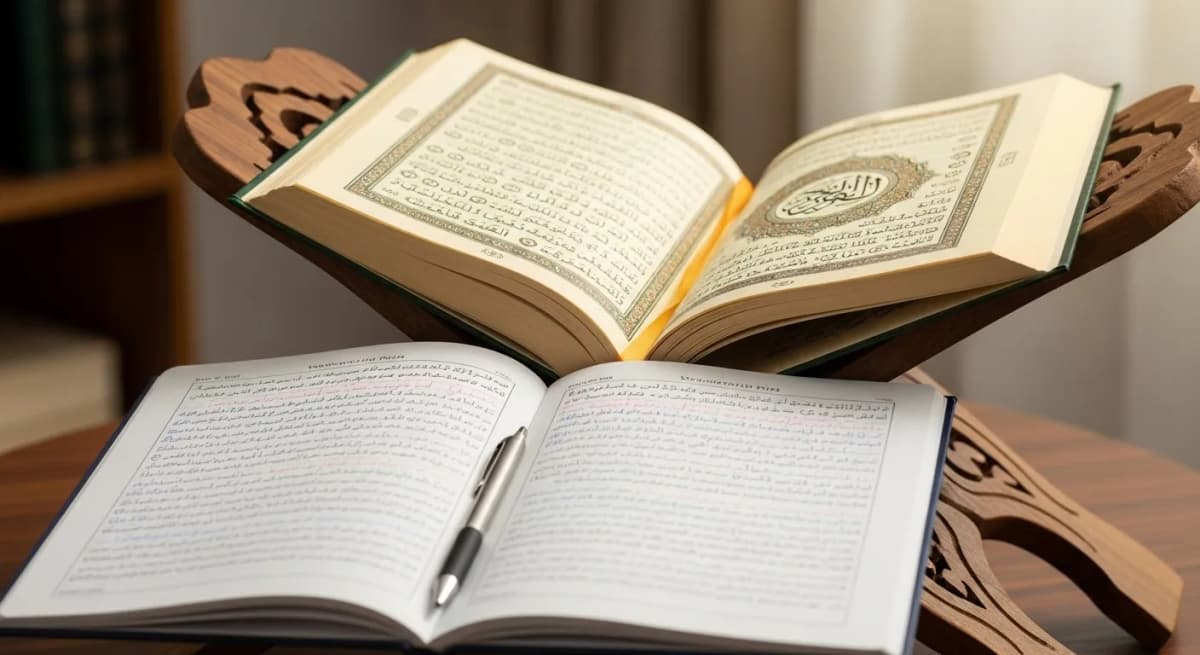
For British Muslim families, Islamic etiquette — Adab (الآداب) — is what makes faith visible. It is the difference between a child who prays five times and one whose teachers say "there's something different about that family" in a positive way: the child who eats with their right hand, says السلام عليكم to their grandparents on a video call, helps the elderly neighbour with shopping, doesn't interrupt, doesn't backbite, doesn't waste food.
Our online Islamic Etiquette (Adab) Course UK teaches over 100 practical, Sunnah-based etiquettes from the Qur'an, Hadith, and classical scholarship — drawn from Imam al-Nawawi's Riyad al-Salihin (the most-loved Adab compendium in Sunni Islam) and Imam al-Ghazali's Ihya 'Ulum al-Din Book of Adab. Lessons are one-to-one with Al-Azhar certified scholars on UK GMT/BST time slots, taught in fluent English, with a constant focus on how each etiquette applies to British Muslim daily life — at home, at school, at work, in the mosque, on social media.
Why Islamic etiquette (Adab) matters for British Muslim families
The Prophet Muhammad ﷺ said: "I was sent only to perfect noble character." (Musnad Ahmad 8952, sahih). Islam is not just rituals; it is a complete way of conducting yourself in every moment — from waking up to sleeping, from greeting a stranger to handling anger, from eating dinner to leaving the bathroom. Adab is what gives faith its shape.
For British Muslim families specifically, Adab matters in three immediate ways:
• It defines your child's reputation at school. British state-school teachers consistently report that Muslim children from families that practise Adab are noticeably calmer, more respectful, and more disciplined. That reputation opens doors — for your child, and for the wider British Muslim community.
• It shapes your family relationships. The way you speak to your spouse, listen to your children, honour your parents, treat your in-laws and visit your relatives — every one of these has a specific Adab in Islam. Most British Muslim adults have never been taught these explicitly; they pick them up from culture and assume they're Islamic.
• It is your dawah without saying a word. Most non-Muslim Britons form their opinion of Islam from a single Muslim they know — a colleague, a neighbour, a parent at the school gate. Your Adab is the most powerful dawah you will ever do.
The 12 areas of Adab this course covers:
(1) Adab of greeting (السلام), (2) Adab of speech (الكلام), (3) Adab of eating and drinking (الطعام والشراب), (4) Adab of sleep and waking (النوم والاستيقاظ), (5) Adab of the bathroom (الخلاء), (6) Adab of clothing (اللباس), (7) Adab of the mosque (المسجد), (8) Adab of family — parents, spouse, children, relatives (الأسرة وصلة الرحم), (9) Adab of neighbours (الجار), (10) Adab of travel (السفر), (11) Adab of disagreement and anger (الخلاف والغضب), (12) Adab for British Muslim modern life — workplace, social media, school RE class, non-Muslim hospitality.
“I was sent only to perfect noble character.” – Prophet Muhammad ﷺ (Musnad Ahmad 8952)
Why British Muslim families choose Eaalim for Islamic Etiquette (Adab)
Three British Muslim audiences this course is for + 100+ practical examples
(1) British Muslim parents teaching children: if you give your child the 12 areas of Adab early, you give them an anchor that survives playground pressure, secondary-school identity questions, and university freshers' week. UK parents report this is the single most-impactful Islamic course they take.
(2) British Muslim adults — particularly second-generation: many British Muslims absorbed cultural manners from Pakistani / Bangladeshi / Arab / North African heritage and assume they're Islamic. The course helps you separate the Sunnah from the cultural baggage — keeping the gold and discarding the rest.
(3) British reverts to Islam: Adab is the area where reverts most often feel unsure — "is this a cultural thing or an Islamic thing?" Our scholars give you the evidence (Hadith with reference) so you know exactly what is Sunnah and what is custom.
1. Adab of greeting (السلام) — 8 examples:
• Initiate with السلام عليكم ورحمة الله وبركاته — full form earns 30 hasanat (Sunan Abi Dawud 5195).
• Reply with وعليكم السلام ورحمة الله وبركاته — return with equal or better.
• Younger greets older first; smaller group greets larger; walking greets sitting; rider greets walker (Sahih al-Bukhari 6231).
• A smile is sadaqa: تبسمك في وجه أخيك صدقة (Tirmidhi 1956). Practise it on the British school run.
• Don't initiate salam with non-Muslims, but if they say it, return it with وعليكم (or fully if you wish — the Prophet ﷺ did so with respectful non-Muslims).
• Shake hands when greeting another Muslim of your gender — minor sins fall away (Sunan Abi Dawud 5212).
• When entering your home, say السلام علينا وعلى عباد الله الصالحين — even if no one is in (Tirmidhi 2698).
• Saying salam to a child specifically is the Sunnah of the Prophet ﷺ (Sahih Muslim 2168).
2. Adab of speech (الكلام) — 8 examples:
• Speak good or remain silent: من كان يؤمن بالله واليوم الآخر فليقل خيراً أو ليصمت (Sahih al-Bukhari 6018).
• No backbiting (ghibah): even if true, even if your colleagues are doing it at the British workplace lunch table.
• No nameemah (carrying tales between people): "the namman shall not enter Paradise" (Sahih al-Bukhari 6056).
• Truthfulness: lying is haram even in jest, even in WhatsApp family group chat banter.
• Lower the voice: إن أنكر الأصوات لصوت الحمير (Luqman 31:19). The Qur'anic etiquette of vocal volume.
• Don't interrupt — wait until the speaker finishes (the Prophet ﷺ never interrupted).
• Say بسم الله before starting any meaningful speech (lecture, presentation, important call).
• Avoid foul language and cursing — "the Prophet was not obscene, foul-mouthed, or cursing" (Sahih al-Bukhari 6031).
3. Adab of eating and drinking — 9 examples:
• Say بسم الله before; if you forget, say بسم الله أوله وآخره when you remember.
• Eat with the right hand — "Shaytan eats with his left hand" (Sahih Muslim 2020).
• Eat from what is closest to you on the plate (Sahih al-Bukhari 5376).
• Don't blow on hot food — let it cool naturally.
• Drink water in three sips, not one gulp (Sahih Muslim 2028).
• Don't drink standing if avoidable.
• Praise Allah after eating: الحمد لله الذي أطعمنا وسقانا وجعلنا مسلمين (Sunan Abi Dawud 3850).
• Don't waste food — even the British staple of cleaning your plate is Sunnah-aligned.
• Don't criticise food the host has prepared (Sahih al-Bukhari 3563).
4. Adab of sleep — 7 examples:
• Wudu before sleeping (Sahih al-Bukhari 247).
• Sleep on the right side (Sahih al-Bukhari 6314).
• Recite Ayat al-Kursi — Shaytan won't approach until morning (Sahih al-Bukhari 2311).
• Recite the last two ayat of Surah Al-Baqarah (Sahih al-Bukhari 5009).
• Recite Surah Al-Mulk before sleep (Tirmidhi 2890).
• Du'a: باسمك اللهم أموت وأحيا.
• On waking: الحمد لله الذي أحيانا بعد ما أماتنا وإليه النشور.
5. Adab of the bathroom — 6 examples:
• Enter with the left foot, say اللهم إني أعوذ بك من الخبث والخبائث.
• Don't face the Qibla while relieving yourself (Sahih al-Bukhari 144).
• Don't speak inside the bathroom unnecessarily.
• Use the left hand for cleaning.
• Exit with the right foot, say غفرانك.
• Be thorough with cleanliness — taharah is half of faith (Sahih Muslim 223).
6. Adab of the mosque (UK context) — 7 examples:
• Enter with the right foot, say اللهم افتح لي أبواب رحمتك.
• Pray two rakahs of Tahiyyat al-Masjid before sitting (Sahih al-Bukhari 1163).
• Lower your voice — even more so in British mosques where non-Muslim visitors may be present.
• Don't walk in front of someone praying.
• On Jumu'ah: ghusl, best clothes, perfume, arrive early (Sahih al-Bukhari 880).
• Listen to the khutbah silently — even speaking to silence another invalidates the reward (Sahih al-Bukhari 934).
• Exit with the left foot, say اللهم إني أسألك من فضلك.
7. Adab of family — parents (10 examples):
• Birr al-walidayn — kindness to parents — comes second only to Tawhid (Al-Isra 17:23).
• Mother three times, father once, when asked who deserves your kindness most (Sahih al-Bukhari 5971).
• Don't say أف ("ugh") to them (17:23).
• Visit them weekly if they live in the UK; call them daily if they're overseas.
• Don't disagree publicly with them in front of others.
• Look after them in old age — never "send them to a home" without trying every alternative.
• Make du'a for them: رب اغفر لي ولوالديّ.
• Treat their friends and relatives kindly even after they pass (Sahih Muslim 2552).
• Pay any debts they left.
• Visit their graves regularly if buried in the UK.
8. Adab of neighbours — 6 examples:
• The Prophet ﷺ said Jibril kept advising him about neighbours until he thought they would inherit (Sahih al-Bukhari 6014).
• Share food (especially soup) with British non-Muslim neighbours — Sunnah and powerful dawah.
• Help with shopping, snow shovelling, parcels.
• Don't blast Qur'an recitation at high volume — be considerate.
• Tolerate small annoyances.
• Greet them: السلام عليكم if Muslim, a warm "good morning" otherwise.
9. Adab of disagreement and anger — 5 examples:
• Make wudu when angry (Sunan Abi Dawud 4784).
• If standing, sit; if sitting, lie down (Sunan Abi Dawud 4782).
• Seek refuge: أعوذ بالله من الشيطان الرجيم.
• Don't divorce in anger; don't post on social media in anger.
• "The strong is not the one who throws others; the strong is the one who controls himself when angry" (Sahih al-Bukhari 6114).
10. Adab for British Muslim modern life — 6 examples:
• At a UK workplace Christmas party: greet politely, decline alcohol with grace ("I don't drink, thank you"), eat what is halal, leave at a reasonable time. The Sunnah of tolerance without compromise.
• On social media: don't share before verifying (Al-Hujurat 49:6); don't expose private family matters; don't argue with mockers.
• In RE class: speak respectfully of other faiths, correct factual errors gently, and never disparage even icons your classmates respect.
• Visiting non-Muslim relatives at Christmas: respect their celebration, don't eat haram food, give a respectful gift, focus on the family ties not the festival.
• Online learning Adab: enter the lesson on time, dress modestly even on Zoom, mute when not speaking, finish with a du'a.
• In the British school sports kit: maintain modesty within the school's accommodation policy; never miss prayer for a fixture.
“The most beloved of the slaves of Allah are those with the best manners.” – Prophet Muhammad ﷺ (Tabarani, hasan)
What you'll be able to do by the end of the Adab course
Apply 100+ Sunnah etiquettes daily — by source, not by guess
Teach your children with confidence
Become a quiet, respected example at school, work and in your community
What Our Clients Say
Hear from those who have experienced the peace of learning with Eaalim.
Related Articles
Ready to start the online Islamic Etiquette course in the UK?
Book your free 30-minute trial today — a real first lesson with an Al-Azhar certified scholar on a UK-time slot. Tell us your starting point (parent worried about child's behaviour at school, second-generation Muslim wanting to separate culture from Sunnah, or revert in your first year), and we'll match you with the right teacher and confirm a weekly British schedule.
