


Online Arabic Grammar Course UK: Nahw, Sarf & Quranic Arabic for British Muslim Families (2026)
Live one-on-one online Arabic grammar (Nahw + Sarf) course for British Muslim families and students in the UK. Built around the proven Al-'Arabiyyah Bayna Yadayk curriculum, taught by Al-Azhar certified scholars on UK GMT/BST time slots. Read the Qur'an word-by-word, parse any ayah, and finally understand Friday khutbahs. Free trial available.
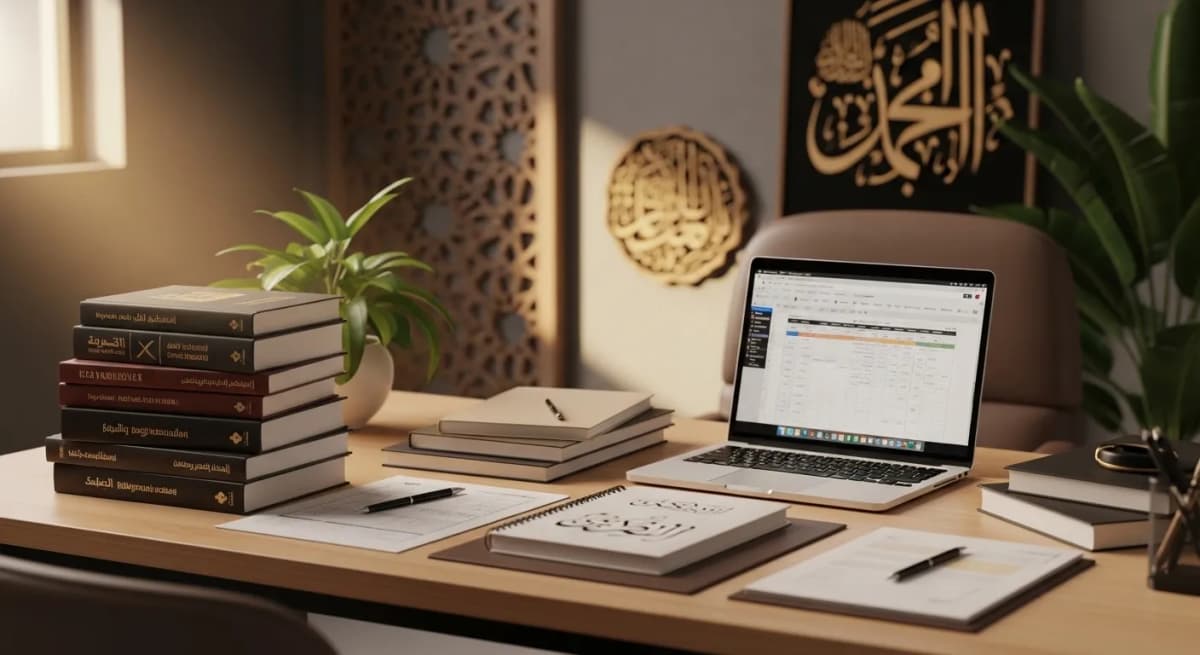
For British Muslim families, Arabic grammar is the single biggest barrier between reciting the Qur'an and actually understanding what it says. Most second-generation British Muslims grow up able to read the Mushaf phonetically — but the moment a non-Muslim friend asks "What does that ayah literally mean?" the words slip away because the verb structures, the cases, the pronoun rules were never properly taught. Our online Arabic Grammar course bridges that gap in a structured British schedule, drawing on the proven Al-'Arabiyyah Bayna Yadayk series (the standard textbook in Saudi Islamic universities and London Arabic institutes) plus classical Nahw and Sarf, taught one-on-one by Al-Azhar certified scholars on UK time slots.
بِلِسَانٍ عَرَبِىٍّۢ مُّبِينٍۢ
—195Why Arabic grammar matters for British Muslim families
Arabic grammar is the bridge between reading and comprehension. The Qur'an's beauty lives in its grammatical precision — every harakah, every case ending, every choice of verb form carries meaning. Without Nahw (syntax) and Sarf (morphology), the British Muslim student is forced to rely on translation alone, and translation always loses something.
This course is built on the methodology of Al-'Arabiyyah Bayna Yadayk ("Arabic in Your Hands") by Dr. Abdurrahman al-Fawzan and team — the standard MSA textbook used in Madinah Islamic University, the International Islamic University and at most serious London Arabic programmes. The series is communicative, structured across three levels, and grounded in Qur'anic and Hadith vocabulary rather than newspaper Arabic. UK families value it because the same book a graduate student in Riyadh uses is the book a British Muslim teenager in Birmingham can use with their Eaalim teacher — same standard, same quality, paced to the British week.
By month three, students are parsing Qur'anic ayat like these:
• قُلْ هُوَ ٱللَّهُ أَحَدٌ — قُلْ (verb of command, fi'l amr), هُوَ (subject pronoun, mubtada'), ٱللَّهُ (predicate, khabar — marfu' with damma), أَحَدٌ (apposition / second khabar — marfu' with tanween).
• إِنَّا أَنْزَلْنَاهُ فِي لَيْلَةِ الْقَدْرِ — إِنَّا (إِنَّ + نا — particle of emphasis with attached pronoun "we"), أَنْزَلْنَا (verb in past tense, conjugated for "we"), هُ (object pronoun "it"), فِي لَيْلَةِ (prepositional phrase, جار ومجرور), الْقَدْرِ (genitive — مجرور بالكسرة after the preposition).
• الْحَمْدُ لِلَّهِ رَبِّ الْعَالَمِينَ — الْحَمْدُ (mubtada', marfu'), لِلَّهِ (jar wa majrur, in place of khabar), رَبِّ (badal — apposition to Allah, majrur), الْعَالَمِينَ (mudaf ilayh — the second part of an idafa construction, majrur with ya' because it's a sound masculine plural).
“The Arabic language is part of your religion, so learn it.” – Umar ibn al-Khattab (RA)
Why British Muslim families choose Eaalim for Arabic grammar
إِنَّآ أَنزَلْنَـٰهُ قُرْءَٰنًا عَرَبِيًّۭا لَّعَلَّكُمْ تَعْقِلُونَ
— 2Three British Muslim audiences who need Arabic grammar
British Muslim teenagers and adults preparing for Hifz or Tafsir: you cannot truly memorise the Qur'an for life, or follow a scholarly Tafsir, without basic Nahw. Many British huffadh hit a wall in their twenties because they never learned grammar — they recite without understanding, and slowly lose interest. This course fixes that.
British Muslim parents who want to teach their own kids: if you know Nahw, you can sit with your child after the school run and explain why الصِّرَاطَ الْمُسْتَقِيمَ ends with a fatha (because it's the مفعول به of اهْدِنَا). UK families consistently report that one parent learning Nahw transforms how the whole household engages with the Mushaf at home.
British Muslim reverts and students of Islamic Studies: you cannot study Tafsir, Hadith or Fiqh seriously in English forever. At some point you need the source language. Al-'Arabiyyah Bayna Yadayk gives you a structured 3-level path that reaches the level where you can open Ibn Kathir's Tafsir and follow it.
Real grammar examples this course teaches, with British classroom in mind:
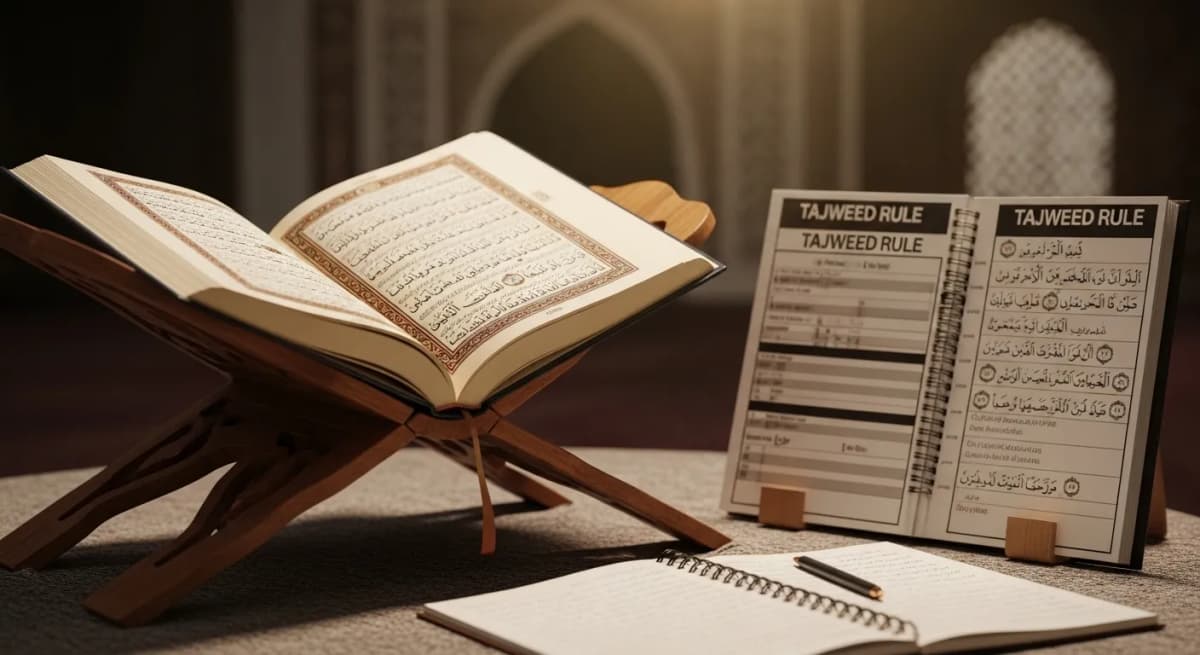
• Verb conjugation: كَتَبَ (he wrote), كَتَبَتْ (she wrote), كَتَبُوا (they-masculine wrote), كَتَبْنَ (they-feminine wrote), كَتَبْتُ (I wrote). The course uses Al-'Arabiyyah Bayna Yadayk's table-based drill that British students learn faster than the older rote method.
• The three case endings: الكتابُ (al-kitabu — subject, marfu'), الكتابَ (al-kitaba — object, mansub), الكتابِ (al-kitabi — after a preposition, majrur). One vowel change, three different roles.
• Idafa (genitive construction): كتابُ اللَّهِ (kitabullah — the Book of Allah). Note الله ends in kasra because it's the second word of an idafa — the cornerstone phrase you'll meet in nearly every Friday khutbah.
• Negation: لَا إِلَٰهَ إِلَّا اللَّهُ — لَا (la nafiya lil-jins — absolute negation), إِلَٰهَ (the negated noun, mansub), إِلَّا (exception), اللَّهُ (the only exception, marfu'). The shahada itself is a complete grammar lesson.
The goal of this online Arabic grammar course is to help British Muslim families and students understand the Quran directly through mastering Nahw (Arabic grammar), Sarf (word structure), and Quranic Arabic — enabling learners to read verses word-by-word, understand Friday khutbahs, and build a strong foundation in the Arabic language with confidence.
كِتَـٰبٌ أَنزَلْنَـٰهُ إِلَيْكَ مُبَـٰرَكٌۭ لِّيَدَّبَّرُوٓا۟ ءَايَـٰتِهِۦ وَلِيَتَذَكَّرَ أُو۟لُوا۟ ٱلْأَلْبَـٰبِ
29What you'll gain by the end of the Arabic Grammar course
Parse any Qur'anic ayah word-by-word
Conjugate verbs across all 14 forms
Read classical Arabic Tafsir and Hadith
What Our Students Say
Hear from those who have experienced the peace of learning with Eaalim.

I studied Arabic before, but this was the first time I understood how grammar connects directly to the meaning of the Qur’an.”
“The teacher explains Quranic Arabic step by step with real ayah examples, not just theory. That made a huge difference for me.”
“The one-to-one lessons helped me stay consistent around my university schedule in the UK. I can now follow parts of the Friday khutbah without translation.”
“For years I could read the Qur’an but never truly understood the grammar behind the verses. This course finally made Nahw and Sarf simple and practical.”
Related Articles

Ready to start the online Arabic Grammar course in the UK?
Begin with 2 free 30-minute trial lessons with two different Al-Azhar certified Arabic grammar teachers, scheduled on convenient UK GMT/BST time slots. These are real one-to-one Nahw, Sarf, and Quranic Arabic lessons — not sales calls.
During the trials, we assess your current Arabic level, explain the learning path clearly, and help you experience how the course works in practice. After both sessions, you can choose the teacher whose teaching style and explanation method suit you best, then continue on a consistent weekly schedule that fits naturally around school, university, work, and family life.
Frequently Asked Questions About the Online Arabic Grammar Course
You will study Nahw (Arabic grammar), Sarf (Arabic morphology), and Quranic Arabic to help you understand Quran verses, Arabic sentence structure, and Islamic texts more deeply.
The course is built around the well-known Al-‘Arabiyyah Bayna Yadayk curriculum along with practical Quranic grammar examples.
Yes. One of the main goals of the course is helping students read and understand Quran verses word-by-word through grammar and vocabulary analysis.
Yes. We offer 2 free trial lessons, each with a different Al-Azhar certified teacher, so you can experience the teaching style, compare approaches, and choose the teacher that suits your learning goals best.
