

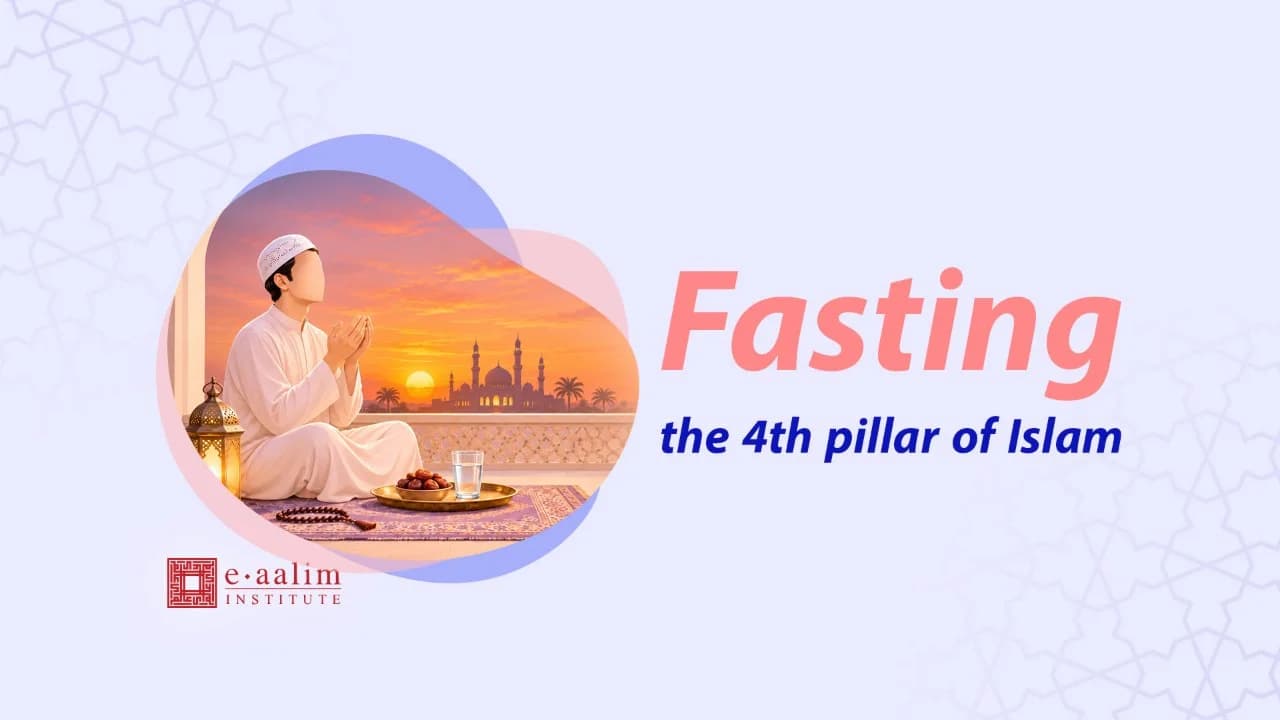
Fasting the 4th pillar of Islam
By Mr. Ali Salama
Ramadan gives Muslims a daily opportunity to strengthen their faith and reconsider their habits. Understanding fasting the 4th pillar of Islam begins with sawm: worshipping Allah by abstaining from food, drink and sexual intercourse from dawn until sunset. However, its purpose reaches beyond physical restraint. It also encourages patience, gratitude and greater awareness of Allah. This guide explains why Muslims fast, who must observe Ramadan and how a fasting day works. For readers in the UK, it also covers local prayer times and everyday planning.
Is fasting the fourth pillar of Islam?
Yes. Muslims commonly list fasting, known as sawm, as the fourth of the five pillars of Islam. It refers specifically to the obligation to fast during Ramadan for Muslims who meet its conditions.
The five pillars are:
Shahadah: declaring faith in Allah and His Messenger.
Salah: performing the five daily prayers.
Zakat: giving obligatory charity when its conditions are met.
Sawm: fasting during Ramadan.
Hajj: making the pilgrimage to Makkah when physically and financially able.
These practices form the foundations of Muslim worship. However, their numbering does not represent a ranking of importance. The order also varies between narrations; Sahih al-Bukhari 8 mentions Hajj before fasting.
What is fasting in the 5 pillars of Islam?
Fasting in the five pillars means observing the Ramadan fast as an act of obedience to Allah. Each daily fast begins at true dawn, when Fajr starts, and ends at sunset, when Maghrib begins.
During these hours, Muslims abstain from food, drink and sexual intercourse. Muslims can eat and drink again after sunset until the next dawn.
Importantly, the fast starts at dawn, rather than sunrise. This distinction matters when reading a Ramadan timetable. Surah Al-Baqarah 2:187 explains the daily boundaries of fasting.
What is sawm in the 5 pillars of Islam?
Sawm is the Arabic word for fasting. In the context of the five pillars, it means the obligatory fasting of Ramadan. Muslims also use the related word siyam for fasting.
However, sawm involves more than changing meal times. Muslims should also guard their speech and behaviour, avoiding dishonesty, insults and harmful actions.
For example, a person may avoid food while continuing to speak cruelly to others. The Prophet Muhammad ﷺ warned against false speech and wrongdoing during fasting. Therefore, good character belongs at the centre of Ramadan worship.
Why do Muslims fast during Ramadan?
The Qur’an connects fasting with developing taqwa, meaning mindfulness of Allah. In Surah Al-Baqarah 2:183, Allah commands believers to fast with this spiritual purpose.
Consequently, fasting offers repeated opportunities to practise restraint. A Muslim leaves permitted food and drink during fasting hours out of obedience to Allah.
Ramadan also has a connection with the revelation of the Qur’an. Therefore, reading its verses and reflecting on their meaning can accompany the daily fast. Surah Al-Baqarah 2:185 explains both this connection and the obligation to fast during the month.
Who must fast, and who is exempt?
Ramadan fasting is generally obligatory for Muslims who have reached puberty, are of sound mind and are physically able to fast. However, Islamic teachings recognise exemptions and circumstances that require different rulings.
Temporary illness or travel
The Qur’an permits those who are ill or travelling to make up missed fasts on other days. Therefore, a valid exemption does not simply remove every future responsibility.
The appropriate ruling depends on the circumstances. A qualified scholar can explain how it applies to an individual situation.
Menstruation
Women do not fast during menstruation and make up the missed Ramadan fasts afterwards. Aishah describes this practice in the narration in Sahih Muslim 335c.
Other circumstances
Pregnancy, breastfeeding and long-term inability to fast require more specific guidance. Depending on the circumstances and scholarly opinion, making up fasts or paying fidyah may apply.
Therefore, avoid assuming that everyone who misses a fast follows the same rule. Seek qualified advice about the relevant exemption and any resulting obligation.
How to organise a fasting day in the UK
A practical routine can help you plan worship alongside work, study and family responsibilities.
Before dawn: allow time for suhoor, the meal eaten before fasting begins.
At Fajr: begin the fast according to your local timetable.
During the day: plan time for prayers and manageable Qur’an reading.
At Maghrib: break the fast at sunset.
During the evening: organise meals, worship and rest around the following day.
Because daylight hours change, avoid reusing an old timetable. Instead, check the correct date and location with a trusted local mosque.
For example, do not automatically use a timetable for London in Glasgow. If local timetables differ, ask your mosque which calculation and guidance it follows.
What if you eat or drink forgetfully?
Eating or drinking through genuine forgetfulness does not require abandoning the fast. The Prophet Muhammad ﷺ instructed the person who forgetfully eats or drinks to complete it.
Therefore, stop eating or drinking when you remember, then continue fasting. This guidance appears in Sahih al-Bukhari 1933.
Is all Islamic fasting obligatory?
The fasting associated with the fourth pillar is Ramadan fasting. However, Muslims may also observe voluntary fasts outside Ramadan.
Muslims should distinguish clearly between obligatory and voluntary fasting. A voluntary fast does not replace an outstanding obligatory fast.
For further reading, explore Eaalim’s guide to voluntary fasting in Islam.
Understanding Fasting the 4th Pillar of Islam
Understanding fasting the 4th pillar of Islam starts with its purpose, daily boundaries and recognised exemptions. Next, put that knowledge into practice through a local timetable and a realistic worship routine.
To explore related topics, read about the first ten days of Ramadan and i‘tikaf during the last ten nights.
Start your journey with Eaalim today!
Start 2 Free Trials


 Share
Frequently Asked Questions
The blog explains that a Muslim devotes their worship exclusively to Allah, which is why intention (niyyah) is central to fasting the fourth pillar of Islam. It cites the Prophet ﷺ saying "Deeds are but intentions, and every human is accounted for what they intended," meaning the angels record a good deed for its doer based on the intention behind it. The blog defines intention as the wish, will and determination to do something on purpose, and notes scholars differ on whether it is made once at the start of Ramadan or renewed each day.
Suhoor is the late-night meal eaten in the last part of the night to support a Muslim through the day's fast — the word comes from the Arabic "sahar," meaning the last part of night. The blog explains there is blessing in Suhoor and that it is the Prophet's sunnah to delay it until just before the dawn prayer. A Muslim may eat whatever they like, though most prefer light meals such as yoghurt or dairy products with bread, and some take only a few sips of water.
According to the blog, Muslims end their fast as soon as the sun sets, at the exact time of the Maghrib prayer. It is the Prophet's sunnah to break the fast with a few dates and a little water, though many add various juices. The blog advises against large, heavy meals immediately at iftar, noting they are not very healthy and leave a person unable to move after a long fast; it recommends a light meal, then praying Isha and Taraweeh, before a fuller dinner later.
The blog states the Prophet's sunnah for du'a at these times is precise. At Suhoor a Muslim is recommended to say words to the effect of intending to fast for Allah's sake and asking for the strength to do so. At iftar the Prophet ﷺ recommended saying that the fast was kept for Allah and broken with His provision, asking forgiveness for sins and shortcomings, and noting that the thirst has gone, the veins are moistened, and the reward is confirmed if Allah wills.
