

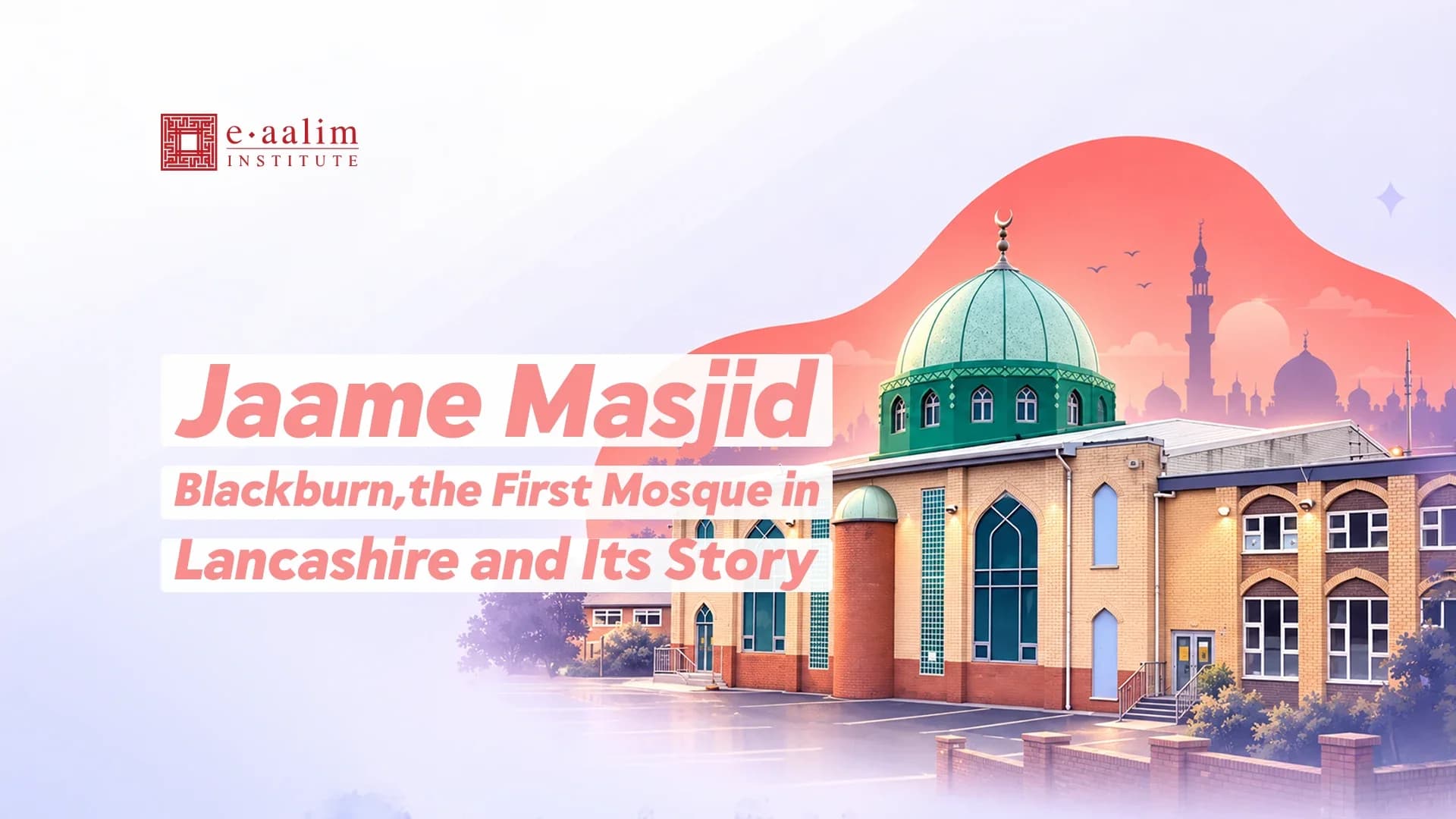
Jaame Masjid Blackburn, the First Mosque in Lancashire and Its Story
By Mr. Ali Salama
A remarkable story of faith, community, and Islamic heritage began with a small mosque that became a landmark in British Muslim history: Jaame Masjid Blackburn. Founded in 1962, it holds a special place as the first mosque in Lancashire. Discover how it grew from two converted terraced houses into a thriving centre for prayer, Islamic education, and community activities, and explore its historical journey and lasting impact on generations of Muslims.
Address and contact
Address: Jaame Masjid Islamic Cultural Centre, Cumberland Street, Blackburn BB1 1JP
Postcode: BB1 1JP
Nearest station: Blackburn (about 15 minutes by car or bus)
Buses: Multiple Blackburn bus routes serve Whalley Range
Brief history
The Blackburn Pakistani community (1960s onwards)
Blackburn's Pakistani Muslim community began forming in the 1960s as Pakistani immigrants — particularly from the Punjab (Gujrat, Mirpur districts) — came to Lancashire to work in the textile mills. By the early 1960s, the community had grown large enough to need a permanent place of worship.
The founding of Jaame Masjid Blackburn (1962)
Muslims established Jaame Masjid Blackburn in 1962 in two converted terrace houses, making it the first mosque in Lancashire. Then, as Blackburn’s Muslim community grew through the 1970s and 1980s — both through chain migration and natural growth — the mosque expanded.
Expansion (1990s onwards)
Consequently, multiple expansions transformed the original modest premises into the substantial complex it is today, with main prayer hall, women's prayer area, classrooms, library, and community spaces. Today, many families also support this mosque learning with online lessons from Eaalim Institute.
Current activities
Five daily prayers with congregational salah at standard times.
Friday Jumuah — the main weekly gathering, drawing thousands of worshippers from Blackburn and surrounding Lancashire towns.
Madrasah classes for children — Quran reading, basic Tajweed, Urdu, and Islamic studies. In fact, the mosque’s madrasah is one of the largest in the North-West.
Tarawih and Eid prayers — Tarawih during Ramadan with multiple imams; Eid prayers held in the mosque and at nearby Witton Country Park (overflow).
Funeral (janazah) services for the local Muslim community, with an in-house ghusl facility.
Community welfare — food bank coordination, Ramadan iftar provision, support for new arrivals.
Inter-faith dialogue — Jaame Mosque has hosted Christian, Jewish, and civic leaders for dialogue events over many years.
The wider Blackburn Muslim community context
Blackburn has one of the highest Muslim population concentrations in any UK borough. According to the 2021 UK Census, approximately 35% of Blackburn with Darwen's population identifies as Muslim — the second-highest concentration in any local authority area in England and Wales (behind Tower Hamlets). Moreover, the community is predominantly Pakistani-origin, with a smaller Indian Gujarati community and growing populations of Yemeni, Somali, and convert Muslims.
Furthermore, major mosques in Blackburn include the Jaame Mosque, Bilal Masjid, Masjid-e-Anisul Islam, and several others. Indeed, together they serve a population of approximately 50,000+ Muslims in the borough.
Visiting the Jaame Mosque
In general, visitors are welcome for the five daily prayers, Friday Jumuah, and organised tours. Standard mosque etiquette:
Remove shoes at the entrance.
Modest dress (long trousers/skirt, sleeves; women cover the hair).
Phones on silent.
For organised visits, school tours, or interfaith events, contact the mosque directly.
In addition, Blackburn’s Visit My Mosque events (annually around March/April with the national Muslim Council of Britain campaign) are a particularly welcoming time for non-Muslim visitors.
Halal food in Blackburn
Also, Blackburn is famous for its halal food scene. Notable areas:
Whalley Range — the area around the Jaame Mosque is dense with halal restaurants, sweet shops, and grocers.
Bank Top — one of Blackburn's most concentrated Muslim residential and commercial areas with extensive halal food options.
Notable restaurants: Akbar's, multiple Pakistani-style grills, and traditional curry houses.
Sweet shops: Several traditional South Asian sweet shops in the Whalley Range and Bank Top areas.
What British Muslim families can take from this mosque's story
Working-class British Muslim heritage matters. In fact, the Blackburn Pakistani community came to work in textile mills; they built one of the most concentrated Muslim populations in the UK. Therefore, their story is part of British Muslim history.
Mosques grow from communities. The Jaame Mosque started in a residential property and expanded over decades. Similarly, UK Muslim institutions building today should expect similar long timelines.
Multi-ethnic Muslim community works. For example, Pakistani, Indian Gujarati, Yemeni, Somali, and convert Muslims pray together at the Jaame Mosque.
Northern UK Muslim communities are substantial. Blackburn, Bradford, Manchester, Leeds, Sheffield, Newcastle — the North has a different Muslim story from London-centric narratives. Indeed, the Quran links the building of mosques to faith in al-Tawbah 9:18.
How Eaalim helps Blackburn Muslim families with Quran lessons
Eaalim provides one-on-one online Quran lessons that complement the local madrasah at the Jaame Mosque or any UK mosque. Eaalim — 30 minutes (15-20 for under-7s), GMT/BST, in pounds, free real trial. Start here.
Frequently asked questions
Start your journey with Eaalim today!
Start 2 Free Trials


 Share
Frequently Asked Questions
Muslims established Jaame Masjid Blackburn in 1962 in two converted terrace houses, making it the first mosque in Lancashire.
Address: Jaame Masjid Islamic Cultural Centre, Cumberland Street, Blackburn BB1 1JP
According to the 2021 UK Census, approximately 35% of Blackburn with Darwen’s population identifies as Muslim — the second-highest concentration in any local authority area in England and Wales (behind Tower Hamlets).
In general, visitors are welcome for the five daily prayers, Friday Jumuah, and organised tours.
