

Zakir Naik UK Profile: Biography, Career & Latest Updates
By admin on 12/22/2025 · 6 min read
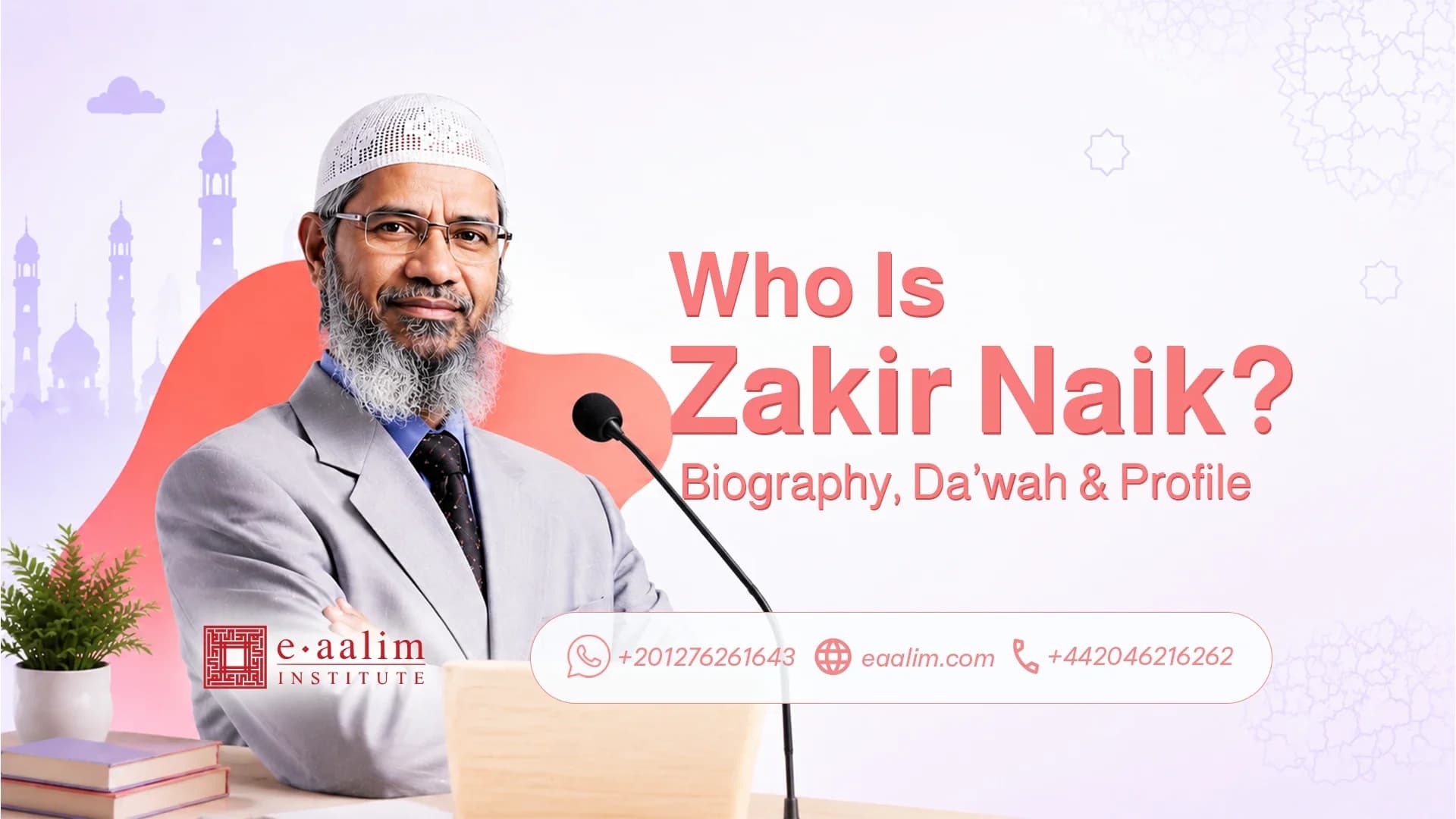
Who Is Zakir Naik? The Ultimate Guide to His Life
Zakir Naik UK Profile is your complete guide to the biography, career, achievements, and latest updates of Dr. Zakir Naik. This article explores his early life, medical education, Islamic work, global influence, and the key milestones that made him one of the world's best-known Islamic speakers.
Zakir Naik UK Profileis a complete guide covering his biography, career, achievements, and latest updates.
Zakir NaikProfile is one of the most widely-followed Islamic public speakers in the world, and a familiar name in many British Muslim households. He is known above all for his lectures on comparative religion,
delivered in fluent English and drawing on the scriptures of several faiths. This guide walks through his early life, his education, and the path that took him from medicine to full-time da'wah — the story of how Zakir Naik became the speaker millions recognise today.
Zakir Naik UK Profileis one of the most searched topics by people looking to learn about his biography, career, and latest updates.
Zakir Naik UK Profile: Early Life
Zakir Abdul Karim Naik was born on 18 October 1965 in Mumbai (then Bombay), India. He grew up in an educated household; his father, Dr Abdul Karim Naik, was a physician known for his community service and philanthropy. That environment of learning and public service shaped his outlook from an early age.
For his schooling, he attended St. Peter's High School (ICSE) in Mumbai, and later studied at Kishinchand Chellaram College. From there, his path pointed — at first — toward medicine rather than preaching. E-aalim is an online educational platform and institute. E-aalim teaches the Holy Quran, Arabic and Islamic studies online.
Zakir Naik UK Profile: Medical Career
Following the family's background in medicine, Zakir Naik pursued a career as a doctor. He studied at the Topiwala National Medical College and the BYL Nair Charitable Hospital, and then at the University of Mumbai, where he earned his Bachelor of Medicine and Surgery (MBBS). Consequently, he trained and qualified as a medical doctor before turning his attention fully to Islamic work.
This medical background would later shape his style. In particular, he became known for a structured, evidence-driven approach to religious discussion — a habit of argument that reflected his scientific training. E-aalim reners blogs on the most famous Muslim celebrities worldwide. On such an important Muslim celebrity is Dr. Zakir Naik.
The turn to da'wah
Although medicine was his profession, his deeper passion lay in Islamic outreach. Naik was inspired by the lectures of Sheikh Ahmed Deedat, a well-known figure in comparative religion, and he admired Deedat's method of using reasoning and scripture in dialogue. As a result, he gradually shifted from medicine toward da'wah — first part-time, and then as his full-time calling.
The Islamic Research Foundation (1991)
In 1991, Zakir Naik took the decisive step of his career. He founded the Islamic Research Foundation (IRF), a Mumbai-based non-profit dedicated to promoting Islamic education and understanding through media and events. Through the IRF, he built a platform for lectures, publications and educational programmes.
Moreover, the organisation's work extended into schooling. The IRF also established the Islamic International School in Mumbai, aiming to combine a full academic education with an Islamic environment. The online students and learners at E-aalim are kid, adult, male and female Muslims worldwide.
Zakir Naik UK Profile: Peace TV
His reach expanded dramatically with the move into broadcasting. In 2006, he founded Peace TV, an English-language satellite channel dedicated to Islamic programming. The channel later added other language services, extending his lectures to audiences well beyond the English-speaking world.
In addition, his presence online grew enormously in the following years. His YouTube channel, active since 2011, has drawn millions of subscribers and hundreds of millions of views. For many British Muslim young people, these videos are their first encounter with his comparative-religion style. The online teachers and tutors at E-aalim are efficient, dedicated, experienced and hardworking native speakers, male and female al-Azhar graduates
His style and approach
Zakir Naik is best known for a particular format: detailed, evidence-based talks that compare Islam with other faiths. His lectures feature extensive memorised citations from the Bible, the Vedas, the Bhagavad Gita and other scriptures, alongside the Qur'an. This approach positioned him as an apologist speaker who engages other religious texts on their own terms.
His medical, logical style made his talks accessible to a broad audience, including educated professionals. Indeed, that blend of plain reasoning and wide reading is much of what built his following. At E-aalim the Quran learners study Quran Tafseer and Tajweed so that they can understand the meanings of the holy Quran. In addition they can recite the holy Quran in exactly the same way prophet Mohammad recited it when first revealed to him by angel Gibril.
Zakir Naik UK Profile: Recognition
Over the years, Zakir Naik has received several honours for his work. These include the Sharjah Award for Voluntary Work (2013), the Dubai International Holy Quran Award (2013), and the King Faisal Prize (2015).
An important note on credentials
One point deserves clarity for British Muslim families. Zakir Naik is medically trained, while his Islamic knowledge is largely self-taught and developed through his own study and engagement. He does not hold formal degrees from classical institutions such as al-Azhar or the Islamic University of Madinah, and his content is da'wah and comparative religion rather than formal fiqh or theology.
This is context, not criticism. It simply means his lectures are best treated as an introduction and an inspiration — a starting point that works best when paired with structured learning from formally-trained teachers. E-aalim have their own online courses. The E-aalim online courses include Quran Tajweed, Tafseer, Hadith, Seerah, Adab, Fiqh and Ebadat. Join the E-aalim online courses and learn more about Islam and the Islamic faith.
What British Muslim families can take from his story
A career can serve the deen. He trained for years as a doctor, then redirected that discipline toward Islamic work. His story shows that professional skills are not wasted when a person turns toward service.
Preparation matters. His structured, evidence-based style did not appear from nowhere; it grew out of years of reading and training. Serious da'wah rests on serious preparation.
Inspiration needs foundation. A powerful lecture can spark interest, but it cannot replace grounded study. Pair the inspiration with a qualified teacher.
Build your foundation with Eaalim
Lectures can open the door, but real understanding grows through structured study. Eaalim's teachers are Al-Azhar graduates who teach the Qur'an, tajweed, Arabic and Islamic studies one-to-one online, around UK time zones. To ground your family's learning, book a free 30-minute trial lesson.
Pair with related pieces
Closing
Dr Zakir Naik is a major contemporary Muslim public figure with substantial reach, significant strengths, and substantial controversy. British Muslim families should engage with informed selectivity rather than blanket endorsement or rejection. Build a portfolio of scholarly voices. Ground your daily Qur'an study with formally-trained teachers. Book a free Eaalim Qur'ān class to begin.
Start your journey with Eaalim today!
Start 2 Free Trials


 Share
ShareFrequently Asked Questions
Dr Zakir Abdul Karim Naik — born 1965 in Mumbai, India. Trained as a medical doctor (MBBS) before transitioning to full-time da'wah in the early 1990s. Founded the Islamic Research Foundation (1991) and Peace TV (2006) — the English-language satellite Islamic channel.
Detailed comparative-religion debates with extensive memorised citations from the Bible, the Vedas, the Bhagavad Gita, and other religious scriptures alongside the Qur'an. Positioned as an apologist scholar engaging non-Muslim religious texts on their own terms.
Peace TV reportedly reaches over 200 million viewers globally. His debates with non-Muslim religious scholars circulate widely on YouTube. Particularly strong following among British Pakistani, British Indian, and broader South Asian heritage Muslim communities in the UK.
In 2010, then-Home Secretary Theresa May barred him from entering the UK, citing "unacceptable behaviour." Several of his statements on terrorism, on women, and on other religions had been the subject of significant scrutiny. The ban remains in effect.
No. Zakir Naik is medically trained; his Islamic credentials are self-taught and through engagement with Salafi-leaning scholars. He does not hold formal degrees from al-Azhar, Madinah, the Indian Deobandi madāris, or other recognised classical institutions. His content is da'wah and comparative religion, not formal fiqh or theology.
Some specific statements have been criticised by classical Sunni scholars across multiple schools. His public statements on contemporary issues have been controversial. The debate format can prioritise victory over depth. British Muslim listeners should not treat his rulings as the sole authority on contested questions.
Use selectively, not exclusively. Pair with classically-trained scholars (Yasir Qadhi, Mufti Menk, Hamza Yusuf, your local UK ulamāʾ). Cross-reference theological claims. Be aware of UK political context. For young British Muslim viewers — supervise; discuss; help children develop discernment about scholarly authority.
Build a portfolio: Mufti Menk, Hamza Yusuf, Yasir Qadhi, Omar Suleiman, Mufti Taqi Usmani, Akram Nadwi (UK-resident), Suhaib Webb. For deeper Islamic study, engage with locally-resident UK qualified scholars and one-to-one teachers. Eaalim teachers are al-Azhar graduates — book a free trial at eaalim.com/free-trial.
