

Idgham Shafawi Explained in 7 Simple Points — A UK Guide (2026)
By Eaalim Institute on 6/29/2026 · 4 min read
For British Muslim families learning Tajweed — clear, simple, and example-led.
If you are a British Muslim parent helping a child read, a busy adult improving your recitation, or a revert beginning the Qur'an, the rules of the silent meem can seem confusing. They are simpler than they sound. This short guide explains one of them — Idgham Shafawi — in seven very easy points, with examples from the Qur'an. By the end, you will understand it and be able to hear it on the page.
1. What "This rule" means
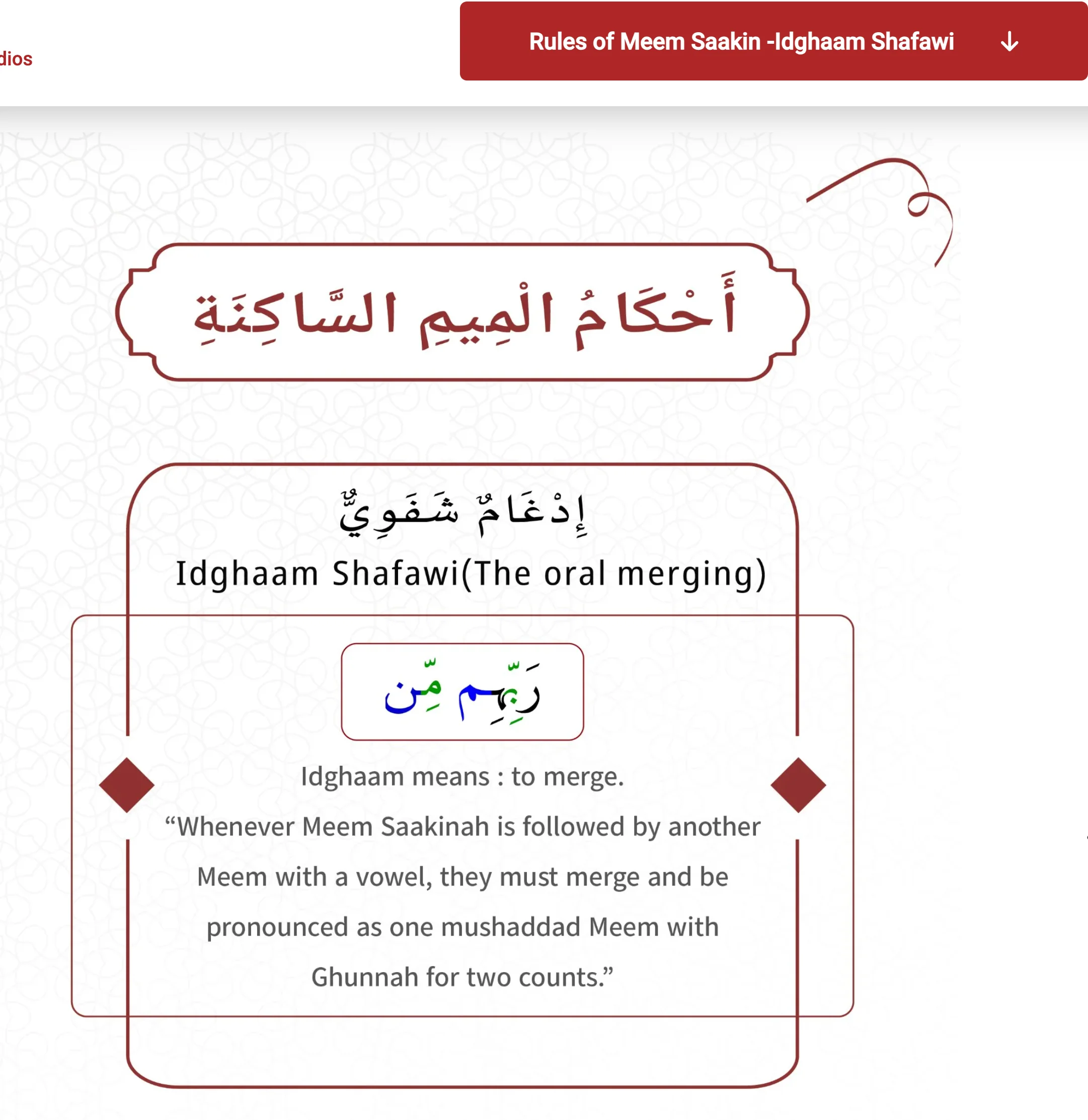
Idgham means to merge — to join one letter into the next so the two become one. Shafawi means of the lips (from the Arabic word for lips, shafataan). So this means "merging at the lips".
It is called "of the lips" because the letter involved — the meem — comes from the two lips. This is what separates it from the merging rules of the noon.
2. The meem sakinah — what it is
A meem sakinah is a meem (م) carrying a sukoon — a meem with no vowel on it, like the meem in "lahum" (لَهُمْ) or "lakum" (لَكُمْ).
The silent meem has three rules in total. Idgham Shafawi is one of them. The other two are labial hiding (ikhfa' shafawi, before ba') and labial clarity (izhar shafawi, before all the other letters). Today we focus only on Idgham Shafawi.
3. The one letter that triggers it
This rule has just one letter. Only one. It is another meem (م).
So the rule only happens in one situation: when a silent meem is immediately followed by a second meem. If you remember "silent meem, then a meem", you remember exactly when to apply this rule. Because the two letters are the same, scholars also call this the merging of two identical letters.
4. The rule, in one sentence
When a meem sakinah (مْ) is followed by another meem (م), the two merge into one doubled meem, held with a nasal sound (ghunnah) for two counts.
The first meem disappears into the second. You do not say two separate "m" sounds. You say one strong, doubled meem — and you hold the nasal hum on it for about two counts.
5. How to actually do it
Here is the simple way to produce it:
Instead of one quick "m", make it a single doubled meem (as if it carries a shaddah).
Hold the nasal hum (ghunnah) through your nose for two counts (about a second and a half), then continue.
The feeling is one firm, "mm" with Gunnah — not two separate taps of the lips. A teacher's ear is what tells you if the merge and the hum are right.
6. Real examples from the Qur'an
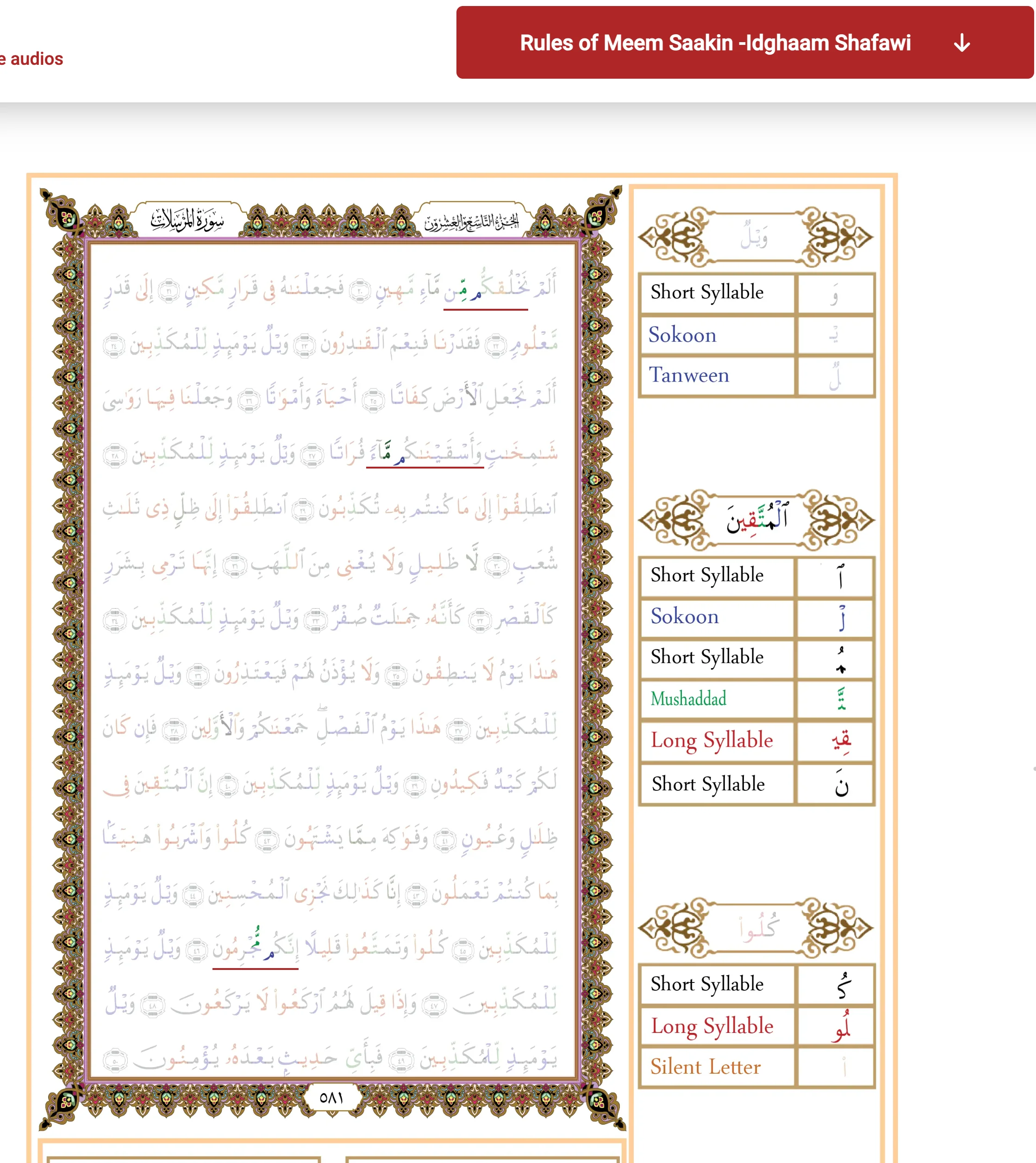
Read each one slowly and hold the hum on the doubled meem:
﴿لَهُم مَّا يَشَاءُونَ﴾ — "lahum-ma yasha'oon" — the two meems become one doubled, hummed meem.
﴿وَلَكُم مَّا كَسَبْتُمْ﴾ — "wa lakum-ma kasabtum".
﴿فِي قُلُوبِهِم مَّرَضٌ﴾ — "fi qulubihim-maradun".
﴿عَلَيْهِم مُّؤْصَدَةٌ﴾ — "ʿalayhim-mu'sadah".
Notice the pattern: every time a sakin meem meets another voweled meem, the two join into one doubled meem, held with a nasal Ghunnah.
7. Common mistakes — and how to master them
Two mistakes are very common among British learners:
Saying two separate meems. This breaks the merge. The two must become one doubled meem, not "m-m" with a gap.
Dropping the ghunnah. Without the two-count nasal hum, the rule is incomplete. The Ghunnah is the heart of this rule.
The right strength of the merge and the length of the Ghunnah are meteculous— you cannot judge them in your own voice. Only a trained teacher can hear them and correct you in real time, and one good correction can fix the habit for good.
To practise the rule visually, the free Eaalim Tajweed exercise library lets you drill each rule on real Mushaf pages with the rule highlighted.
For live correction, at Eaalim our Al-Azhar certified teachers teach British Muslim families one-on-one, online, on UK time slots (GMT and BST), with pricing in pounds and a free trial — no card needed.
Start your free trial: Learn Quran Online (UK)
Full pathway: 50-Hour Tajweed UK course
For children aged 5–14: Kids UK programme
In short: Idgham Shafawi is just one situation — a silent meem followed by another meem. Merge the two into one doubled meem and maintain the nasal Ghunnah for two counts. Master this tiny rule and your recitation becomes smoother and more correct.
May Allah make the Qur'an easy on your tongue and beloved to your heart. Āmeen.
Start your journey with Eaalim today!
Start 2 Free Trials


 Share
Frequently Asked Questions
It is one of the three rules of the mīm sākinah (silent mīm). When a silent mīm is followed by another mīm (م), the two merge into one doubled mīm held with a nasal sound (ghunnah) for two counts. 'Shafawi' means 'of the lips' because the mīm comes from the two lips.
Only one letter: another mīm (م). The rule applies whenever a mīm sākinah is immediately followed by a second mīm. Because the two letters are identical, it is also called the merging of two identical letters.
Close the lips for the mīm and make it one single doubled mīm (as if it has a shaddah), holding the nasal hum (ghunnah) through the nose for two counts, then continue. It is one firm hummed 'mm', not two separate taps.
In ﴿لَهُم مَّا يَشَاءُونَ﴾ ('lahum-mā yashā'ūn') the two mīms merge into one doubled, hummed mīm. Another example is ﴿فِي قُلُوبِهِم مَّرَضٌ﴾.
