From Catholic to Muslim: Santiago Abdullah's Quran Journey (A British Muslim Reflection)

By aburuqayyah on 12/22/2025 · 4 min de lecture

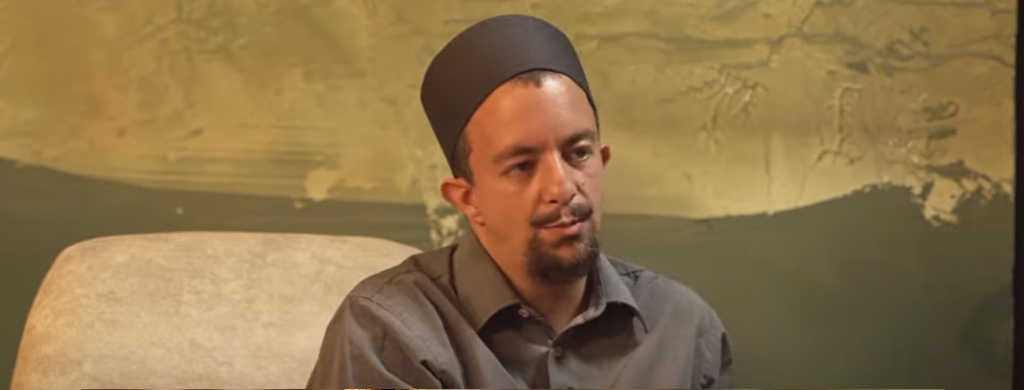
Every British Muslim community has stories of converts — sometimes called reverts, because Islam teaches that every soul is born in a state of natural belief and submission to Allah (fitrah). Among the most striking modern examples are the journeys of South Americans, Eastern Europeans, and Far Eastern travellers who reach the shahadah through their own search for meaning. This article tells the journey of Santiago Abdullah Salah — from a Christian background in Latin America to a confident Muslim life — and what his story teaches British Muslim families about how the Quran genuinely changes hearts.

The Quran says of itself: "Indeed, this Quran guides to that which is most just and right and gives good tidings to the believers" (Surah Al-Israʾ 17:9). The story below is one of millions of cases that bear out that promise.

Santiago Abdullah Salah's path

Santiago grew up in a Spanish-speaking Catholic family in Latin America. By his late teens he was deeply uncomfortable with several Catholic doctrines — the Trinity, original sin, the cycle of confession through a priest. He drifted from formal religion in his early twenties, exploring Eastern philosophies and atheism, but found neither convincing.

The turning point came when a Muslim friend lent him a translation of the Quran. Reading Surah Al-Fatihah for the first time, Santiago described feeling that "this is what I always knew but could never put into words." Over the following months he attended his local mosque, asked questions, and finally took the shahadah, choosing the name Abdullah (servant of Allah) and keeping Salah as a family name.

The Quran as protection — learning Quran online

Once he had embraced Islam, Santiago began the practical work that every revert faces: learning to read Arabic, memorising the daily prayers, and building a relationship with the Quran. His first surah was Al-Fatihah; he then memorised the three al-muʿawwidhat (Al-Ikhlas, Al-Falaq, An-Nas) for the duʿaʾ before sleep.

The Prophet Muhammad ﷺ said about Surah Al-Falaq and An-Nas: "Recite the muʿawwidhatayn before sleep; nothing is better protection from evil" (Sunan Abu Dawud 1462, sahih). For a new revert in any country, regular Quran recitation is what shifts identity from "I converted" to "I am Muslim".

Santiago's teacher worked with him in one-to-one online lessons because in his country, finding qualified Quran teachers was difficult. This is the same pattern many British Muslim reverts and second-generation Muslims experience — the local mosque madrasah may not have the time or capacity for adult one-to-one teaching.

Santiago's daily Quran study

  • After Fajr: 15 minutes of recitation review
  • Mid-day at work: reading 5-10 ayahs with a translation app on his phone
  • Before sleep: reciting the muʿawwidhatayn three times each, plus Ayat al-Kursi

This pattern mirrors what Eaalim teachers recommend for British Muslim adults rebuilding their relationship with the Quran. It is sustainable around work, family, and the unpredictable weather of British life.

What British Muslim families can take from convert journeys

  • The Quran itself is the strongest da'wah. Many converts cite reading the Quran — not a lecture, not a debate — as the moment everything clicked.
  • Practical structure follows belief. Once someone believes, they need a teacher, a daily routine, and clear next steps. Eaalim teachers specialise in this exact transition.
  • Reverts are not "less Muslim". Many converts have a freshness of practice that born-Muslims envy. British Muslim parents should welcome reverts in their mosques and homes.
  • Children of converts often become unusually grounded Muslims — because their parents had to consciously choose Islam, the practice is intentional from the start.

How British reverts can begin learning the Quran

Eaalim Institute teaches Quran and Arabic to British reverts and born-Muslims alike. Lessons are 30 minutes (15-20 for under-7s and beginners), one-to-one online with Al-Azhar certified teachers, in pounds with no hidden fees. The free 30-minute trial is a real lesson with a real teacher, paced gently for adult beginners. Book here.

Frequently asked questions about the Quran and conversion to Islam

Commencez votre voyage avec Eaalim dès aujourd'hui !

Essai gratuit
Facebook
Pinterest
X
LinkedIn
Instagram
Share
Share

Frequently Asked Questions

In Islamic theology there is no difference in status. Both terms describe the same act — embracing Islam by saying the shahadah. 'Revert' is preferred by many Muslims because the Prophet (peace be upon him) said: 'Every child is born upon the fitrah (the natural state of submission to Allah). It is his parents who make him a Jew, a Christian, or a Magian' (Sahih al-Bukhari 1359, Sahih Muslim 2658). On this view, embracing Islam is returning to the original state, not converting from one religion to another. UK practice uses both terms; both are correct.

By saying the shahadah with sincere belief: 'Ash-hadu an la ilaha illa Allah, wa ash-hadu anna Muhammadan rasul Allah' — I bear witness that there is no god worthy of worship except Allah, and I bear witness that Muhammad is the Messenger of Allah. There is no formal ceremony required, though many UK mosques offer to record the shahadah and connect new Muslims with classes and the local community. Once said with conviction, the person is a Muslim.

Most major UK mosques have new-Muslim programmes. The East London Mosque, Birmingham Central Mosque, Manchester Central Mosque, Glasgow Central Mosque, and Cardiff Central Mosque all run weekly classes. National organisations like the New Muslim Project (Markfield, Leicestershire) and iERA's basics of Islam programmes provide structured early teaching. Online, Eaalim Institute pairs new Muslims with patient one-to-one teachers for Quran and Arabic from the first week.

In this order: Al-Fatihah (essential for salah), then Al-Ikhlas, then Al-Falaq, then An-Nas. These four cover the minimum for valid prayer plus the daily protective recitation before sleep. Within the first 6-12 months, also memorise Al-Kursi (the throne verse, Al-Baqarah 2:255) and the last two ayahs of Al-Baqarah, both highly emphasised in authentic hadith.

With a one-to-one online teacher and 15-30 minutes of daily practice, most British adult reverts can perform the five daily prayers properly within 4-6 weeks. The first 2 weeks focus on wudhu (ablution) and Surah Al-Fatihah. The next 2 weeks add the postures (rukuʿ, sujud) and a short surah after Al-Fatihah. By week 6, most reverts can pray confidently from memory. Tajweed and longer surahs follow gradually.

Be a normal friend, not a project. Invite them to family iftars in Ramadan, take them to Friday Jumuah at your local mosque, lend them simple Islamic books in clear English (start with The Sealed Nectar by Mubarakpuri, then Towards Understanding Islam by Mawdudi). Avoid overwhelming them with rules in the first weeks. Help them find a one-to-one Quran teacher. Most importantly, respect their pace — Islam is a lifelong journey, not a 6-month bootcamp.

Yes. Quran.com (free Quran app), Bayyinah TV (free intro courses), the New Muslim Academy (online structured curriculum), and many UK mosque YouTube channels. Eaalim Institute offers a free 30-minute trial lesson — a real lesson with a real teacher, not a sales call — to help new Muslims start with proper Tajweed from day one.

No. Islam does not require name changes. The Prophet (peace be upon him) only changed names that had un-Islamic meanings. Names like David, Sarah, Tom, or Emma are perfectly Islamic to keep. Many reverts choose to take an Arabic kunyah or middle name as personal preference (Abdullah, Yusuf, Maryam, Aisha) without changing their legal British name. Some do change legally; both are acceptable.

This is one of the hardest experiences for British reverts. Islam emphasises kindness to parents even when they are not Muslim — the Quran says: 'Be dutiful to your parents... but if they strive to make you join in worship others with Me, of which you have no knowledge, do not obey them' (Surah Luqman 31:14-15). Continue treating your family with full kindness. Time and patient example often soften initial reactions. Many UK reverts find their parents come to peace with the choice within 2-3 years.

Yes — and many born-Muslims report that hearing how converts came to Islam re-energises their own practice. The conscious choice that converts make highlights truths that born-Muslims can take for granted: that Islam is rationally compelling, that the Quran is intrinsically powerful, and that prayer and remembrance genuinely change a life. Sharing such stories at home with British Muslim teenagers is a powerful Islamic upbringing tool.