


Zakir Naik
By admin on 12/22/2025
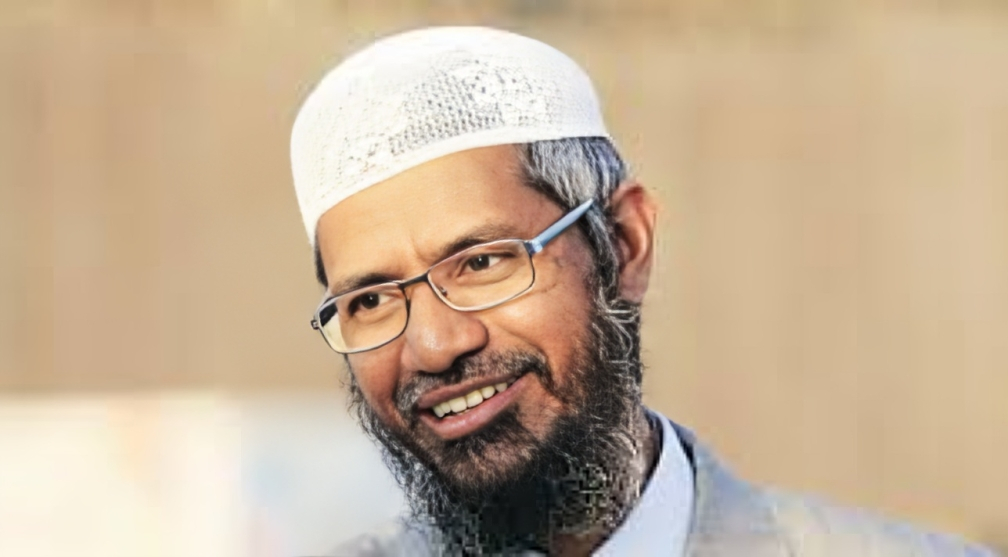
Who is Zakir Naik
Zakir Naik is a contemporary Indian Muslim orator. he was born on 18 / 10 / 1965. Zakir concentrates on comparative religion study. he has founded and heads the Islamic Research Foundation and Peace TV channel. he is well known all over the Islamic world as a SalafistRumors around Zakir
The Indian authorities charged Zakir with money laundering in 2016. So Zakir never returned to India ever since. However, India, Bangladesh, Canada, Sri Lanka and Britain banned Zakir’s Peace TV channel.Zakir's early life and education
Zakir was born in Bombay where he went to school and studied medicine at the Topiwala National Medical College and the university of Bombay. At that university, Zakir got his bachelor of medicine degree.Zakir's career in Dawa
Zakir started his career in Dawa in 1991 when he founded an International Islamic school in Mumbai. He also founded the United Islamic Aid to provide scholarships to poor Muslim students. Naik takes Ahmad Deedat as his role model. In 2006, the Islamic Research Foundation launched the Peace TV channel. It is one of the biggest TV networks. In 2021, Zakir launched Al-Hidaya educational TV. This TV broadcasts content about Islam. On this screen prominent Islamic figures appear.Zakir's lectures and debates
During his lectures and debates, Zakir wears a Jacket and a tie. Zakir speaks in colloquial English. Zakir’s knowledge of the Quran and Hadith have made him worldly famous. Naik has given over 4000 lectures and debates around the world". Many of his debates are recorded and widely distributed in video and DVD media and online. Muslims enjoy watching his records in English during which he speaks about Islam and modern science, Islam and Christianity and Islam and secularism. Zakir’s first debate was in 1994, on the views of an Indian female who argued that "religious fundamentalism was a stumbling block to freedom of expression". Four journalists attended the debate which went on for hours. In April 2000, Naik debated with William Campbell in Chicago in 2000 on the topic of "The Qur'an and the Bible: In the Light of Science" This is one of Zakir’s most-cited debates. On 21 January 2006 Naik had a debate with a Hindu monk about the concept of Allah in Islam and Hinduism. In February 2011 Naik addressed the Union of Oxford via video link from India.Zakir in the university of Melbourne
In 2004 Naik visited the University of Melbourne, where he argued that only Islam gave women true equality. He assured that the more "revealing Western dress" makes women more liable to rape. Sushi Das said that "Naik boasted of the moral and spiritual superiority of Islam and belittled other faiths and the West in general". He also said that Naik's words "fostered separateness and reinforced prejudice".Zakir at St David's Hall, Wales
Zakir visited Cardiff in August 2006, which caused controversy when Welsh conservative PM David Davies wanted Zakir's visit to be canceled. David said Naik was a "hate-monger".David also said that Zakir’s views did not deserve a public platform. Muslims from Cardiff, however, defended Naik's right to speak in the city. The Secretary-General of the Muslim Council of Wales stated that "people know that Zakir is one of the least controversial persons you could find. Zakir talks about the similarities between religions, and how we should work on the common ground between them", whilst also inviting Davies to discuss further with Zakir personally in the conference. The conference went on and said that they were satisfied that Zakir would not be preaching extremist views.Zakir's visit to Gambia
In 2014, the Gambian president Yahya Jammeh invited Zakir to visit the country to attend the grand celebration of the Gambian 20th Revolution’s anniversary. There Zakir delivered four lectures between 11 and 22 October. The lectures took place in the Gambia University PanchaMi Hall of Paradise Suites Hotel, in Kanilai Foni Kansala, the president's home village. Almost all the Gambian elite attended his lectures on subjects including "Terrorism and Jihad: an Islamic perspective", "religion in the right perspective", "Dawah or destruction?" and "the misconceptions about Islam". Later, Zakir met with the Gambian influentials holding an Islamic conference.Zakir's visit to Malaysia
In 2012, Zakir visited Malaysia and gave four lectures attended by Mahatir Mohammad, the former PM of the country as well as the elite of Malaysia. Despite protest by the non-Muslims, the organizers of Zakir's speeches said they aimed to promote harmony among people of various religions. Zakir gave another six lectures in April 2016. The non-Muslims objected to two of his lectures in Malaysia, entitled "Similarities between Hinduism and Islam" and "Is the Quran God's word?", saying that these lectures might provoke racial tensions. The Government authority supported the event which went ahead as planned. Naik delivered a speech on Islamophobia on 9 August 2019 at the Malaysian national stadium and more than 100,000 people attended it.Some of Zakir's main views
1- Some people believe that Zakir’s views and ideology are similar to Salafis. 2- Zakir considers it a duty of every Muslim to remove perceived misconceptions about Islam and to counter what he views as the Western media's anti-Islamic bias in the aftermath of the 11 September 2001 attacks . 3- Zakir thinks that Islam is a religion of reason and logic, and the Quran contains 1000 verses relating to scienceThe supremacy of islam
4- To Zakir, Islam is the "best" religion, a fact assured by the Holy Quran. He added that, "Islam is also labeled as intolerant, and it is indeed, but towards all evils. Islam is the most 'tolerant' religion as far as promoting human values is concerned."Zakir's opinions about social issues
Zakir thinks that music is like alcohol and said that they are both forbidden in Islam. Naik said that guilty people must be punished and their hands must be cut off for stealing. He has also said that the United States applies this logic to reduce its high crime rate. Zakir says that homosexuality is forbidden in Islam. Naik says the LGBT community are experiencing a mental illness caused by the use of pornography propagated by televisioZakir's opinion about biological evolution
Zakir says that Darwin was faulty with his theory of evolution. Zakir assures that evolution contradicts religion, logic and science itself.zakir's criticism of media
Zakir says that the media is the most effective tool which we should use to spread facts rather than faulty news. He also assures that the media should give a true image of Islam and Muslims.The Eaalim
Eaalim shows us characters and Muslims celebrities like Yasir Qadhi -Eaalim aim to provide young junior and kid Muslims with good role models to follow. Join us now for free Facebook Twitter YoutubeCommencez votre voyage avec Eaalim dès aujourd'hui !
Essai gratuit


 Share
Share