

Day of Arafah Meaning, Fasting Reward, Best Dua and Sunnah Acts
By Mr. Ali Salama
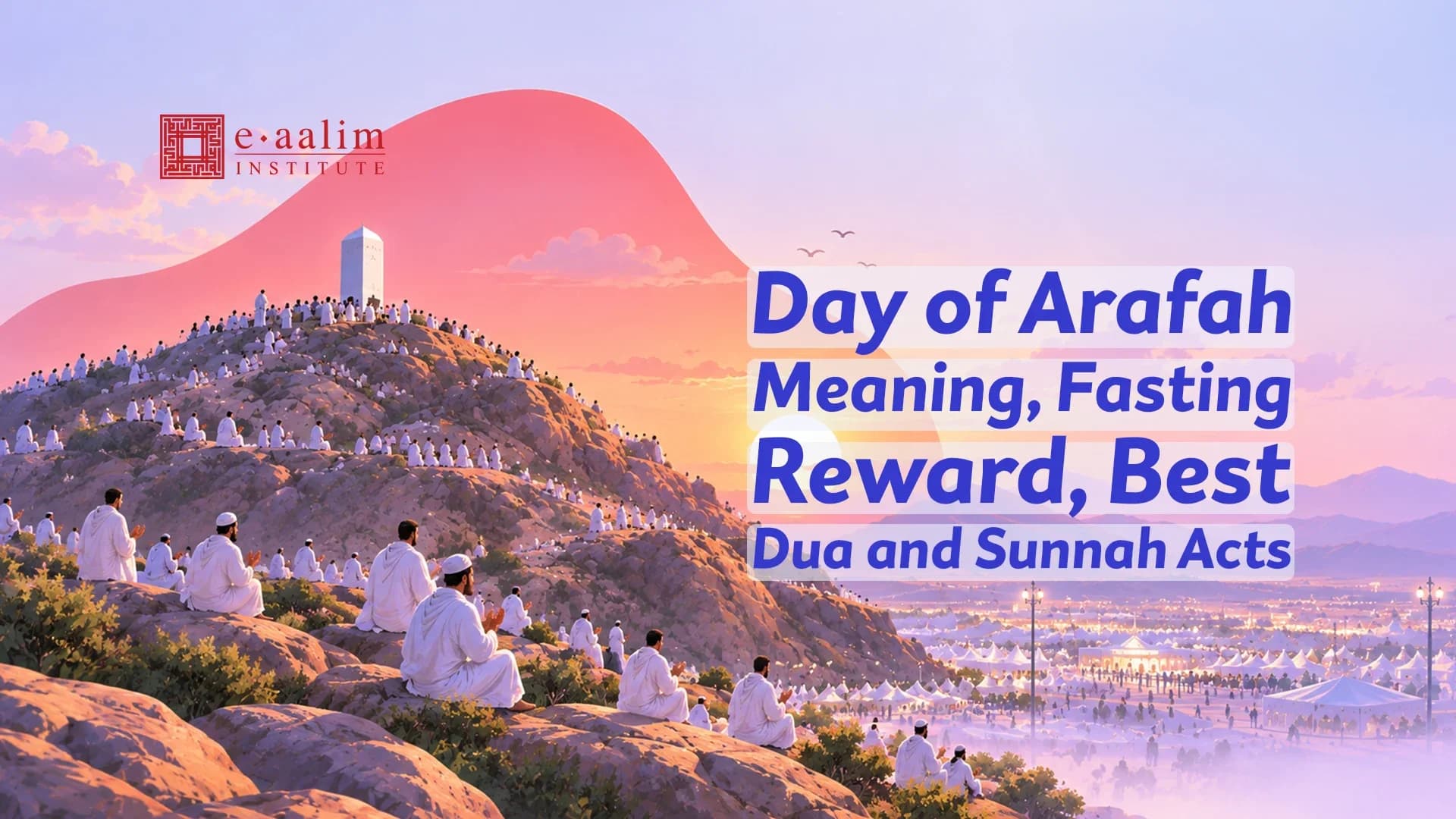
Imagine two million pilgrims standing on one plain, hands raised, asking Allah for mercy until sunset on the Day of Arafah. It falls on the 9th of Dhu al-Hijjah, one of the most spiritually weighted days of the Islamic year. Indeed, the Prophet ﷺ said: “Hajj is Arafah” (Tirmidhi 889), meaning Hajj is invalid without this standing. Moreover, Allah revealed on this day: “Today I have perfected for you your religion” (Quran 5:3). Therefore, this guide explains the Day of Arafah meaning, what happens on it, its reward and how non-pilgrims can share in its blessings.
Day of Arafah meaning and what happens on the day
Pilgrims gather on the plain of ʿArafah — a vast open area approximately 20 km east of Makkah — from after Fajr on the 9th of Dhu al-Hijjah. Then, they remain there from after Dhuhr until sunset, in a state of intense du'aa, recitation, and reflection. The standing (al-wuquf bi ʿArafah) is the essential ritual that defines Hajj. Therefore, a pilgrim who misses ʿArafah has missed Hajj entirely and must perform it again in a future year.
Moreover, the Prophet ﷺ delivered his Farewell Sermon at ʿArafah in 10 AH — the most preserved single sermon in Islamic history. Indeed, Allah revealed the verse “Today I have perfected for you your religion” on that very day (al-Ma’idah 5:3).
Finally, at sunset, pilgrims travel to Muzdalifah (about 9 km away) for the night, then to Mina the next morning for the closing rituals of Hajj. E-Aalim is an online educational platform and institute. The E-Aalim online institute teaches the Holy Quran,Arabic language and Islamic studies online.
Day of Arafah meaning for non-pilgrims
For Muslims worldwide who are not on Hajj — the vast majority — the Day of ʿArafah is one of the most rewarded days for voluntary fasting. The Prophet ﷺ said:
“Fasting on the Day of Arafah expiates the sins of the year before and the year after" (Muslim 1162).
Therefore, adults not on Hajj should fast this day. Indeed, the hadith describes the reward in terms few other voluntary fasts match — two years' worth of sin expiated for a single day of voluntary fasting. The fast is from Fajr to Maghrib, like Ramadan fasting, and Muslims break it at sunset with dates and water.
The Sunnah practices for non-pilgrims on this day
1. Fast the day
In fact, this is the single most important Sunnah for non-pilgrims. The Prophet ﷺ's explicit instruction.
2. Increase du'aa
The Prophet ﷺ said: "The best du'aa is the du'aa of the Day of ʿArafah, and the best of what I and the prophets before me have said is: \'La ilaha illa Allahu wahdahu la sharika lah, lahu al-mulku wa lahu al-hamdu wa huwa ʿala kulli shay'in qadir\'" (Tirmidhi 3585).
3. Increase recitation of the takbir
The takbir — "Allahu akbar, Allahu akbar, la ilaha illa Allah, Allahu akbar wa li-llahi al-hamd" —continues from Fajr of the 9th of Dhu al-Hijjah through to ʿAsr of the 13th of Dhu al-Hijjah. This is one of the established Sunnahs of the period and is increasingly observed in UK masajid.
4. Increase Quran recitation
Part of the Day of Arafah meaning is that it is among the most blessed days for any voluntary act of worship. Quran recitation is the highest such act for most British Muslims.
5. Make personal du'aa at sunset
The classical scholarly position is that Allah is particularly close at sunset on this day — the moment when the pilgrims at ʿArafah complete their standing. Make personal du'aa for everything that matters in your life.
6. Give in charity
The first ten days of Dhu al-Hijjah — including the Day of ʿArafah — are described by the Prophet ﷺ as days in which good deeds are more beloved to Allah than at any other time of the year. Step up your charitable giving. E-Aalim tutors and teachers are dedicated, efficient, experienced and highly qualified arabic native speaker Al-Azhar graduates.
The relationship between ʿArafah and Eid al-Adha
The Day of ʿArafah (9 Dhu al-Hijjah) is followed immediately by ʿEid al-Adha (10 Dhu al-Hijjah). The day after ʿArafah is the festival of sacrifice — when pilgrims at Mina (and Muslims worldwide) slaughter the sacrificial animal in commemoration of Ibrahim ﷺ's submission. The weekday of both days changes each year because the Islamic calendar is lunar.
Why this day matters for every family
It is one of the most rewarded fasts of the year — and one of the most accessible. No travel required, no long preparation, just a single day of fasting that expiates two years of sin.
It connects you to the global Hajj pilgrimage. Part of the Day of Arafah meaning is that, even if you are not on Hajj this year , fasting and du’aa connect you spiritually to the two million pilgrims standing at ʿArafah at the same time.
It precedes Eid. As a result, the combination of the Day of ʿArafah fast followed by Eid celebration creates a powerful spiritual rhythm — fasting and reflection, then communal joy.
It is appropriate for British school-age children from approximately age 10. However, younger children can observe the family practice without fasting; older children can join the fast as preparation for adult religious life. Similarly, E-Aalim Institute helps children learn the takbir and du’aa of these days. The E-Aalim learners and students at E-Aalim are kid, adult, male and female Muslims living mainly in Europe and the U.S.A.
Practical considerations for British Muslim families
The exact UK date varies year to year — check your local masjid for confirmation
For families in summer Hajj seasons, the fast can be 16+ hours — plan accordingly
Schools and workplaces should be informed in advance about the religious observance
Children fasting for the first time should be supported with extra rest and gentle expectations
Where to go next
For more on Hajj and the surrounding rituals, see our guides on How to Perform Hajj, The Conclusion of Hajj, our pillar on Sacrifice and Dedication, and the Cradle of Islam (Makkah). To prepare for this day with focused Quran study, book a free trial lesson.
Start your journey with Eaalim today!
Start 2 Free Trials


 Share
Frequently Asked Questions
Indeed, the Prophet ﷺ said: “Hajj is Arafah” (Tirmidhi 889), meaning Hajj is invalid without this standing.
Moreover, the Prophet ﷺ delivered his Farewell Sermon at ʿArafah in 10 AH — the most preserved single sermon in Islamic history.
Pilgrims gather on the plain of ʿArafah — a vast open area approximately 20 km east of Makkah — from after Fajr on the 9th of Dhu al-Hijjah.
“Fasting on the Day of Arafah expiates the sins of the year before and the year after” (Muslim 1162).
