

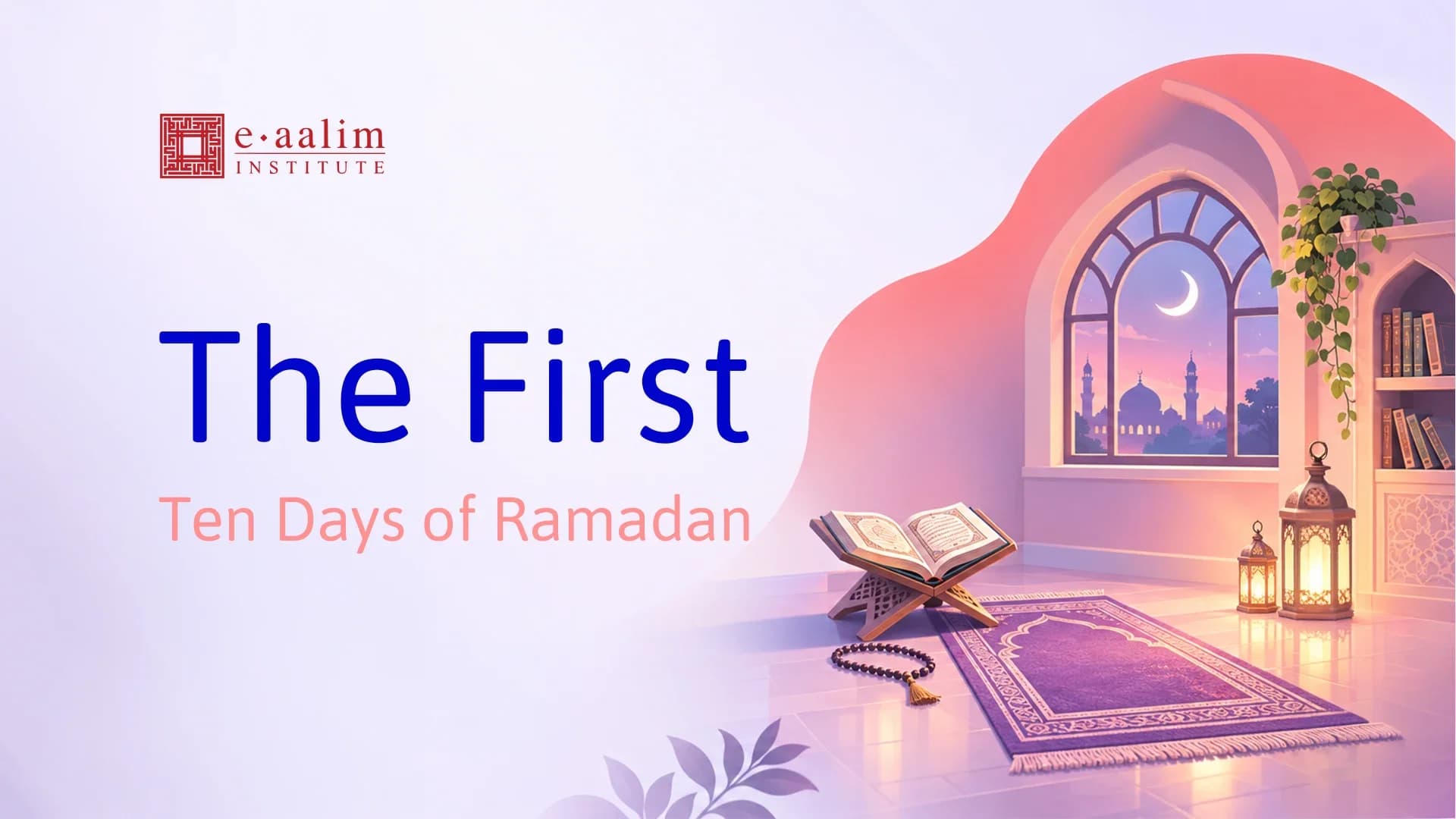
The First Ten Days of Ramadan
By Dr Ali Salama is a specialist in Islamic Sciences and the Quran. on 12/22/2025 · 7 min read
People have just sighted the crescent moon, and as the first 10 days of Ramadan begin, homes across the UK are buzzing with excitement.Families prepare their first suhoor, children ask endless questions, and mosques fill for the first Taraweeh. However, this joy also brings a challenge. The body needs time to adjust, and new habits need a strong start. That is why the first Ten days of Ramadan matter so much. In fact, how you begin often shapes how you finish the whole month.
Why the First Ten Days of Ramadan Matter
The opening days of Ramadan set the rhythm for everything that follows. During this time, your body adapts to fasting, and your heart adapts to extra worship. If you build good habits now, the rest of the month becomes far easier.
Moreover, Ramadan opens with a powerful gift. The Prophet (peace be upon him) said that when Ramadan begins, Allah opens the gates of Paradise. He also closes the gates of Hell and chains the devils (Sahih al-Bukhari 1899). As a result, doing good feels easier from the very first night. So, use this early momentum wisely, because a strong start protects you from the tiredness many people feel by the middle of the month.
What Is the Original Purpose of Ramadan?
Before planning your days, it helps to remember why Allah prescribed this month. The Quran gives a clear answer. Allah says He prescribed fasting “so that you may attain taqwa” (Quran 2:183). Taqwa means God-consciousness, or guarding yourself from what displeases Allah.
In addition, Allah mentions a second purpose a few verses later. He wants believers to complete the days, glorify Him for His guidance and be grateful (Quran 2:185). In other words, Ramadan is not about hunger alone. Rather, it trains the heart to remember Allah, control desires and appreciate His blessings. Keep these goals in mind from the first day, because they turn a tiring routine into meaningful worship.
What Does the Quran Say About Fasting?
Allah speaks about fasting in Quran verses 2:183 to 2:187 in Surah Al-Baqarah. First, He tells believers that He prescribed fasting for them, just as He did for earlier nations. Then, He describes it as “a limited number of days” and gives the sick and travellers permission to make up missed fasts later (Quran 2:184).
Next, Allah reminds us that He intends ease for us, not hardship. Right after that, He says He is near and answers the call of whoever calls upon Him (Quran 2:186). Finally, He sets the times of the fast. Believers may eat and drink until dawn appears, and then complete the fast until night (Quran 2:187). Together, these verses show that fasting combines discipline, mercy and closeness to Allah.
Ramadan and the Quran
Many people ask about Ramadan in the Quran and whether Allah names it there. The answer is yes. In fact, Ramadan is the only month that Allah mentions by name in the Quran. He describes it as the month in which He revealed the Quran as guidance for humanity (Quran 2:185).
This link between Ramadan and the Quran continued throughout the Prophet’s life. For example, Angel Jibril met him every night of Ramadan to review the Quran with him (Sahih al-Bukhari 6). So, set a reading plan in the first ten days. Reading one juz daily completes the Quran in a month. Otherwise, choose a smaller goal and stay consistent. If your recitation needs support, our online Quran classes with Al-Azhar certified teachers can guide you step by step.
Are the First Ten Days Only for Mercy?
Many people share a narration that divides Ramadan into three parts. According to it, the first ten days bring mercy, the middle ten bring forgiveness, and the last ten bring freedom from the Fire. However, hadith scholars consider this narration weak, so we should not attribute it firmly to the Prophet (PBUH).
In reality, Allah’s mercy, forgiveness and freedom from the Fire are available throughout the whole month. For example, the Prophet (PBUH) said that Allah frees people from the Fire every night of Ramadan (Sunan Ibn Majah 1643). Therefore, do not limit your hopes to one theme. Instead, ask Allah for mercy, forgiveness and safety from the Fire every single day.
Building Strong Habits From Day One
Every fast begins with intention. Most scholars say you should intend an obligatory fast before Fajr each day. Fortunately, this needs no special words, since waking up for suhoor with the plan to fast counts. Also, never skip suhoor, because the Prophet (PBUH) said there is blessing in it (Sahih al-Bukhari 1923).
Similarly, break your fast promptly at sunset, and pray Taraweeh regularly. The Prophet (PBUH) promised forgiveness to whoever stands in prayer during Ramadan with faith and hope (Sahih al-Bukhari 37). Above all, guard your tongue. Allah has no need for the fast of someone who does not give up false speech and bad actions (Sahih al-Bukhari 1903).
First Ten Days of Ramadan Dua
People often search for a special first Ten days of Ramadan dua. However, no authentic dua is specific to these days alone. Still, this is a perfect time for dua. The Prophet (PBUH) said that Allah does not reject the dua of a fasting person (Sunan Ibn Majah 1752).
At iftar, you can say “Dhahaba al-zama’u wabtallat al-‘uruqu wa thabata al-ajru in sha Allah” (Sunan Abi Dawud 2357). It means “The thirst has gone, the veins are moist again, and the reward is now certain, if Allah wills.” Many people also repeat “Ya Hayyu ya Qayyum, bi rahmatika astaghith,” meaning “O Ever-Living, O Sustainer, by Your mercy I seek help.” This is an authentic general dua, so you can say it at any time.
The Significance of the Tenth Day of Ramadan
The 10th day of Ramadan closes the first third of the month. Islamic law does not assign it any special act of worship. Nevertheless, it carries historical meaning. According to many historians, Khadijah (may Allah be pleased with her), the Prophet’s first wife, passed away around this date. She was the first person to believe in his message.
In addition, many historians record that the Prophet (PBUH) set out from Madinah towards Makkah on the 10th of Ramadan in 8 AH. That journey ended with the peaceful Conquest of Makkah. Therefore, this day reminds us of loyalty, sacrifice and victory. It is also a good moment to review your progress and renew your goals for the next twenty days.
Helping Children Enjoy Their First Fasts
For children, the first days of Ramadan create memories that last a lifetime. The Companions used to train their young children to fast. To help them, they even gave them toys made of wool to distract them from hunger (Sahih al-Bukhari 1960).
Start gently with younger children. For instance, let them fast until midday, then gradually extend the time as they grow stronger. Meanwhile, keep the atmosphere joyful with a Ramadan calendar, a good deeds chart and small rewards. Also, read short stories of the prophets together after iftar. To help your child build a lasting connection with Islam, our Islamic studies course for kids teaches the basics in a fun, age-appropriate way.
Conclusion
The first Ten days of Ramadan are your foundation for the whole month. Begin with a sincere intention, and remember the purpose of fasting. Also, set a realistic Quran plan, never skip suhoor, and guard your tongue from harmful speech. Most importantly, fill the moments before iftar with heartfelt dua. Small deeds done consistently are better than big efforts that fade quickly. Start strong, stay steady, and you will reach the last ten nights ready to give your best. May Allah accept your fasting and worship.
Start your journey with Eaalim today!
Start 2 Free Trials


 Share
Frequently Asked Questions
The first ten days of Ramadan are the days of mercy.
Fasting Ramadan is obligatory for the adult, sane and healthy muslim.
Eating, drinking, vomiting, bleeding,menstruation, postpartum and having sex by day in Ramadan.
