


The real Islam...Learn Quran online
By aburuqayyah on 12/22/2025
Just search for the truth and you will reach Islam...learn Quran online
When one of us is fair in life
Just in his criticism of others as well as himself
He will find that he is looking for a great way to walk
And a lofty goal is reached
will come to Islam
Because Islam is the religion of Allah
And God sent down the Qur’an for people
To learn how to walk
YVONNE RIDLEY... learn Quran online
Yvonne Ridley Born in 1958
in Durham .
and Yvonne Ridley was a Christian woman who believed in God
Yvonne Ridley is A British journalist,
and Yvonne Ridley was a journalist working for the BBC
Yvonne Ridley A Nobel Prize Nominee for her efforts for supporting the Rohingya Muslims.
and a according to the media
All her is past notion about Islam was negative,
for that Yvonne Ridley had been subliminally brain washed.
Yvonne Ridley Got a Palrstinian passport
after Yvonne Ridley succeeded in breaking the siege imposed on Gaza the summer of 2008
 Quran online" class="wp-image-6820" width="1218" height="539"/>
Before Islam... learn Quran online
Yvonne Ridley was arrested in Afghanistan by the Taliban in 2001 during a press assignment.
and Yvonne Ridley is a journalist working for the BBC who entered Afghanistan illegally.
Yvonne Ridley was caught by the Taliban.
George W. Bush and Tony Blair, described the Taliban regime as the most brutal regime in the world.
War was on the horizon, she wanted to find out what life was like for the ordinary Afghan people.
Yvonne Ridley worked for the Sunday newspaper in London.
She watched the Taliban way of life and found it was according to Islam.
They offered Yvonne Ridley Islam.
Yvonne Ridley promised to study the religion of Muslims,
being untrustful of the Taliban, believing the Bush narrative.
Yvonne Ridley treated them in the worst way,
but they treated Yvonne Ridley well.
and Yvonne Ridley thought it was a Taliban trick to do so.
Yvonne Ridley wanted to test the Taliban.
The Taliban released Yvonne Ridley.
after Arriving Yvonne Ridley to London,
began Yvonne Ridleyis to study Islam.
Yvonne Ridley also wanted to know for herself about Islam.
so began Yvonne Ridley to doubt the Bush-Blair narrative.
 Quran online" class="wp-image-6821" width="1201" height="456"/>
Yvonne Ridley's Journey to Islam
began Yvonne Ridley to read Yusuf Ali’s translation of The Quran.
and Yvonne Ridley was amazed on many levels.
so Yvonne Ridley found out that Islam is pro women’s rights,
against all the negative claims of the media.
Reading the Quran was easy for Yvonne Ridley.
and Yvonne Ridley found all the prophets and messengers she knew in the Holy Quran.
but Yvonne Ridley didn’t know prophet Mohammad.
So Yvonne Ridley read about him.
Yvonne Ridley found him an amazing role model.
said Yvonne Ridley prophet Mohammad was a perfect man.
The best human who ever walked on earth was prophet Mohammad.
and met Yvonne Ridley many scholars both Muslims and Christians,
but Yvonne Ridley had a problem with the trinity.
An ordinary Muslim convinced her when he asked her about the relation between John the Pabtist and Jesus Christ.
When Yvonne Ridley said they were cousins,
said the Muslim , So when John prayed to God:
asked the Muslim, Did John the Pabtist “Uncle God?”
said Yvonne Ridley, that is ridiculous.
The Muslim said, “ exactly.”
Another The Muslim asked Yvonne Ridley what she would do if she had three emails on her computer.
Yvonne Ridley said she would check the latest one.
The Muslim said so the latest message is Islam.
after that Yvonne Ridley gave shahadah
Yvonne Ridley converted to Islam in 2003.
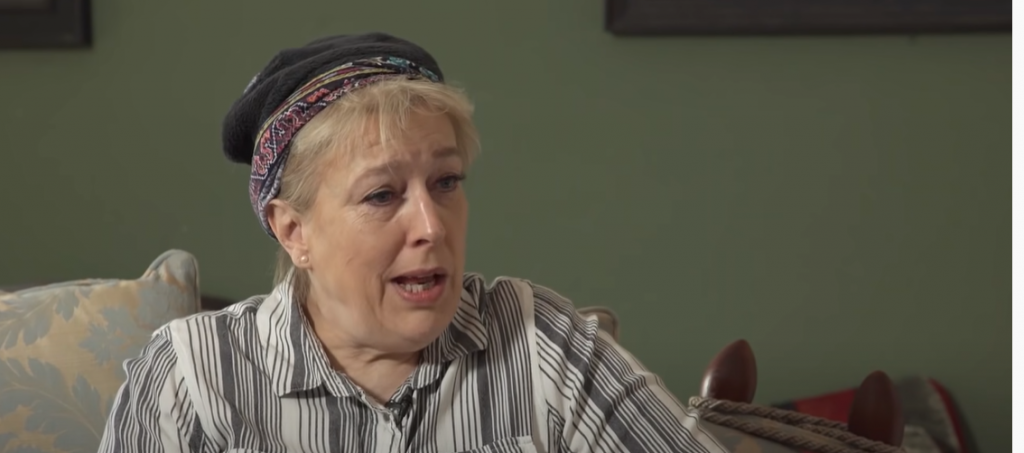
 Quran online" class="wp-image-6822" width="1202" height="347"/>
after Islam
and Yvonne Ridley moved to Qatar
to work for Al-Jazeera as a journalist,
That was a few months before Ramadan.
So Yvonne Ridley was lucky to spend her first Ramadan as a Muslim in an Arab Muslim country.
Yvonne Ridley's friends deserted her for her new faith.
The Muslim community in Britain are wonderfully supportive to her.
began Yvonne to enjoy her loneliness, reading and thinking more about Islam.
and Yvonne began to like, respect and esteem herself, being a new Muslim.
The BBC referred to her as the former journalist Yvonne Ridley.
Yvonne complained a lot till they corrected their mistake.
resumed Yvonne, her career as a journalist.
went to Yvonne, to Edlib, Syria.
Syria was a tough experience.
said YvonneThe only thing keeping people alive there is their faith,
and sticking hard to the “ rope of Allah.”
Yvonne has been a strong supporter of the Palestinians since the age of fourteen.
After the Hijab, she was described as a terrorist.
told them Yvonne, she hasn’t changed.
But are they who have changed?
said Yvonne, The Palestinian plight is a stain in the face of humanity.
Belief in God can make miracles
ابدأ رحلتك مع إي عاليم اليوم!
ابدأ تجربتك المجانية


 Share
Share